

Examining the realities of a solar and wind + battery system
If someone told you they had discovered a cheaper way to power your home, you would naturally expect your bills to be reduced… right?
But then, before you could switch, they tell you to buy another heating system, install a large battery in the garage, replace much of your electrical wiring, and keep the old setup ready as a backup? (I call it “other things” or “ancillary systems”)? Latest at that point, you would probably start asking yourself… if all of that extra equipment is necessary, is the new option really less expensive? And then… how long does this equipment last?
This same question extends well beyond individual households!
Energy sits behind almost everything we do. It powers our lights, heats our homes, keeps hospitals running, extracts mined and grown resources for our survival, moves goods around the world and enables the running of factories that produce the products we buy every day.
This is the reason the cost of electricity does not just stay on your electricity bill. It eventually filters through into food prices, manufacturing costs, transport costs, your taxes and, ultimately, the cost of living.
We are repeatedly been told that solar and wind + batteries systems are becoming so inexpensive that they can provide reliable electricity around the clock, even competing with conventional coal, gas, hydro, and nuclear power plants… but is this a realistic “idea”? because to date, it is only an idea… 😉
End April 2026 IRENA went public with a 60 page report titled 24 / 7 Renewables – the Economics of firm Wind and Solar [1] claiming that “It indicates that co-located solar photovoltaics (PV) and onshore wind systems with battery energy storage systems (BESS) can reliably and cost-effectively provide round-the-clock electricity in favorable resource conditions”.
The report was quickly picked up by major media outlets, leading to headlines such as [2]:
In 2025, solar, wind, and utility-scale battery installations were added to global grids reaching record levels. (see table 1) For example, by end of 2025, solar’s installed capacity of about 2.8 TW (generating 8% of global electricity) surpassing coal’s installed capacity of about 2 TW (generating over 1/3rd of all global electricity while also providing energy for industrial heat applications).
Please note capacity versus generation, 😉 for more information on additions and capacities for solar and wind + batteries for storage (not including EVs) click here
While annual solar additions may have started to decline in 2026 [3], the overall solar, wind + battery build out is still happening at almost unimaginable speed.
If the statement about low cost 24/7 solar and wind + batteries by IRENA is true, why is power demand not being met and why are electricity prices skyrocketing? Can solar and wind + batteries really provide reliable electricity around the clock?
To answer these questions, we first need to understand what it actually takes to turn weather dependent electricity into reliable, useful electricity.
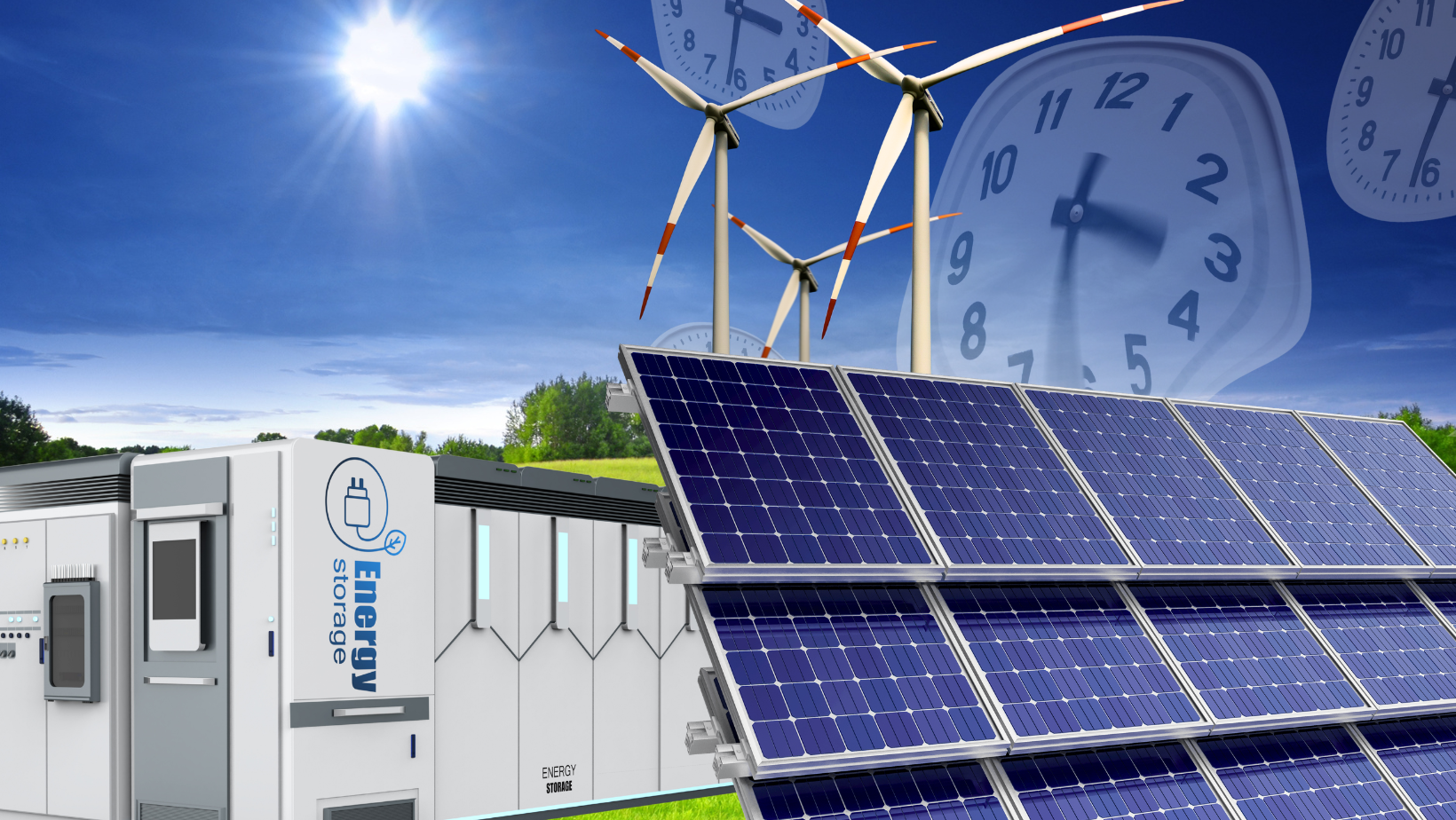
Figure 1: Can solar and wind + batteries really provide 24/7/365 electricity?
The IRENA writes that solar and wind + batteries will give you flat and firm “round-the-clock” “renewable” energy. The agency makes use of the large UAE Al Dhafra 5.2 GW solar-PV-project that boasts 19 GWh of battery storage, [4] as an example claiming this project could supply 1 GW of “firm clean power”.
Please note: in this case, to achieve its claim, the project combines an overbuild of 5.2x with an assumed 19 hours of storage, all in order to achieve the claimed “firmness” of 1 GW from solar photovoltaic.
On page 52 [1] there is another interesting caveat explaining that “IRENA’s reliability definition” … differs from standard power system reliability concepts, which typically focus on adequacy (the continuous ability to meet peak demand) and security (resilience against sudden disturbances)”.
So, in other words we are to understand that this modeling does not mean real-life 24/7 electricity reliability the way you and I or grid engineers would understand it.
There is another caveat that should raise eyebrows: “… the flat output profile underpinning this cost metric is a modelling assumption chosen for comparability and transparency”.
Clearly, the claim that solar and wind + batteries can provide reliable 24/7 electricity at a lower cost than coal or gas (fossil fuels) is, at best, highly questionable.
Let me explain why IRENA’s claim of “in high-quality resource regions, firm renewable electricity has crossed the threshold of cost competitiveness with new fossil fuel generation” is not supported by real-world system requirements and is therefore seriously misleading.
If we strip away the headlines, slogans and modelling assumptions, the question remains… can solar and wind actually provide reliable electricity when we need it? Generating electricity over the course of a year is one thing, but being able to provide electricity when it is needed is quite another.
So let us ask the first question, how reliable are solar and wind WITHOUT storage really?
| Location | 2025 Additions | 2025 Capacities |
|---|---|---|
|
Globally |
additions of over 600 GW of solar, about 160 GW of wind, and probably around 3000 GWh of battery storage |
installed, about 2.8 TW solar, almost 1.3 TW wind, and an estimated 800+ GWh of battery storage |
|
China |
additions of 350+ GW of solar and almost 120 GW of wind and over 190 GWh of batteries |
installed by end 2025, 1,2 TW solar, over 600 GW wind, and over 400 GWh installed battery storage |
|
Germany |
20+ GW of solar and wind plus almost 7 GWh of battery capacity were added in 2025. |
installed by end 2025, 115+ GW solar, almost 80 GW wind, 25 GWh battery storage |
|
USA |
additions of about 30 GW of solar, almost 10 GW of wind, and over 50 GWh of battery storage |
installed, about 160 GW solar, about 160 GW wind, and 150+ GWh of battery storage |
Sources: [1] [8] [9]
2. Reliability of solar and wind WITHOUT storage…
Germany is the industrialized nation with the highest share of solar and wind generation globally. In 2025, about 46% of electricity generation came from solar and wind combined, roughly the same as the year before, but the generation dropped year-on-year (2023-2024) in absolute numbers [5].
Germany’s net load factor (= natural capacity factor x utilization, see my blog – Nature’s influence on solar and wind power generation) for solar was about 9%, meaning, on an annual average, the sun shines a little less than 1 out of 10 hours in a “useful” way. The net load factor of wind was on average (on- and offshore) about 20%, down from 24% two years prior.
For comparison, the net load factors of other regions, which is a close approximation for natural capacity factor given the standard grid-priority for solar and wind.
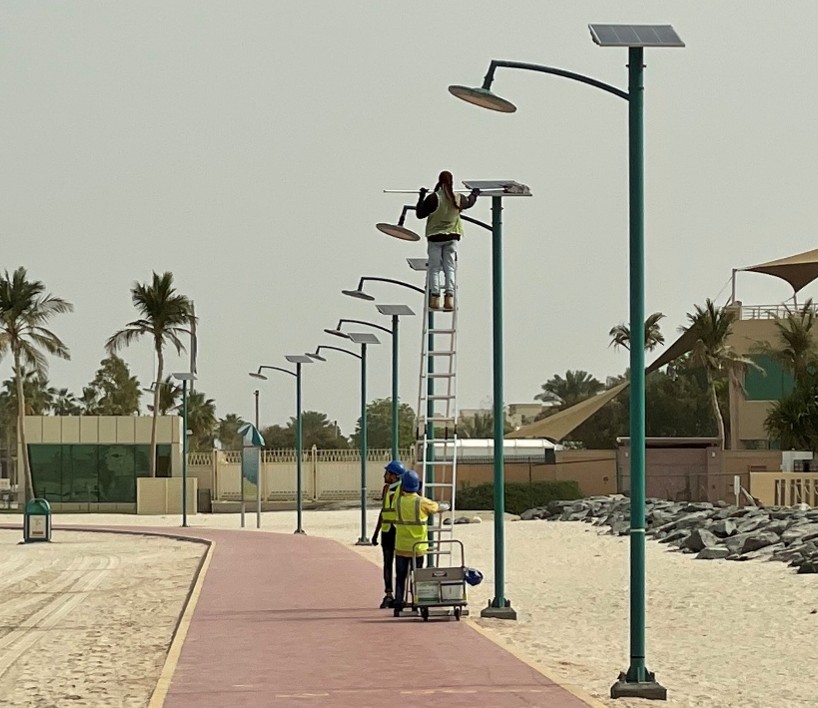
Figure 2: Workers cleaning solar panels along a beach road after a sandstorm in Dubai, UAE (Source: Author’s photo)
In my blog post “Nature’s influence on solar and wind power generation” I clarify that the term “capacity factor” is misleading, because it combines natural capacity factor (only driven and influenced by nature) with utilization (which has nothing to do with nature, i.e. curtailment). I therefore prefer to define:
net load factor = natural capacity factor (nCF) x utilization
In order to examine how complimentary solar and wind truly are, please see my proprietary but simple analysis based on German’s hourly data, adding wind and solar generation, and examining the monthly 4h and 12h combined minimum generation as combination of the total.
As you can see in Figure 3, in Germany, the combined solar and wind generation during the least optimal hours of each month is practically zero. The “worst” 24h period in an given month shows some movement, still remaining below 3%.
The same is true for any region in the world, even in Dubai, the Sahara, California, or South Africa. There are sandstorms (Figure 2) and even rain or snow in the desert, rendering solar panels useless, sometimes for days [5].
At this point, many of you may be thinking… “that is exactly why we have batteries” and that seems like a fair point.
Build batteries… store excess electricity when the weather is favourable and use it later when we need it. I mean, if your phone can store power for later, why should an electricity grid be any different?
The challenge is one of scale. Powering a smartphone, or your home for that matter, for a couple of hours, or even a day, is one thing. Powering an industrial economy through hours, days or even weeks of low solar and wind generation is quite another!
So let’s get back to the central argument behind IRENA’s claim that solar and wind + batteries can provide reliable 24/7 electricity and ask the next question… how much storage would actually be enough and what will this cost us and the environment?
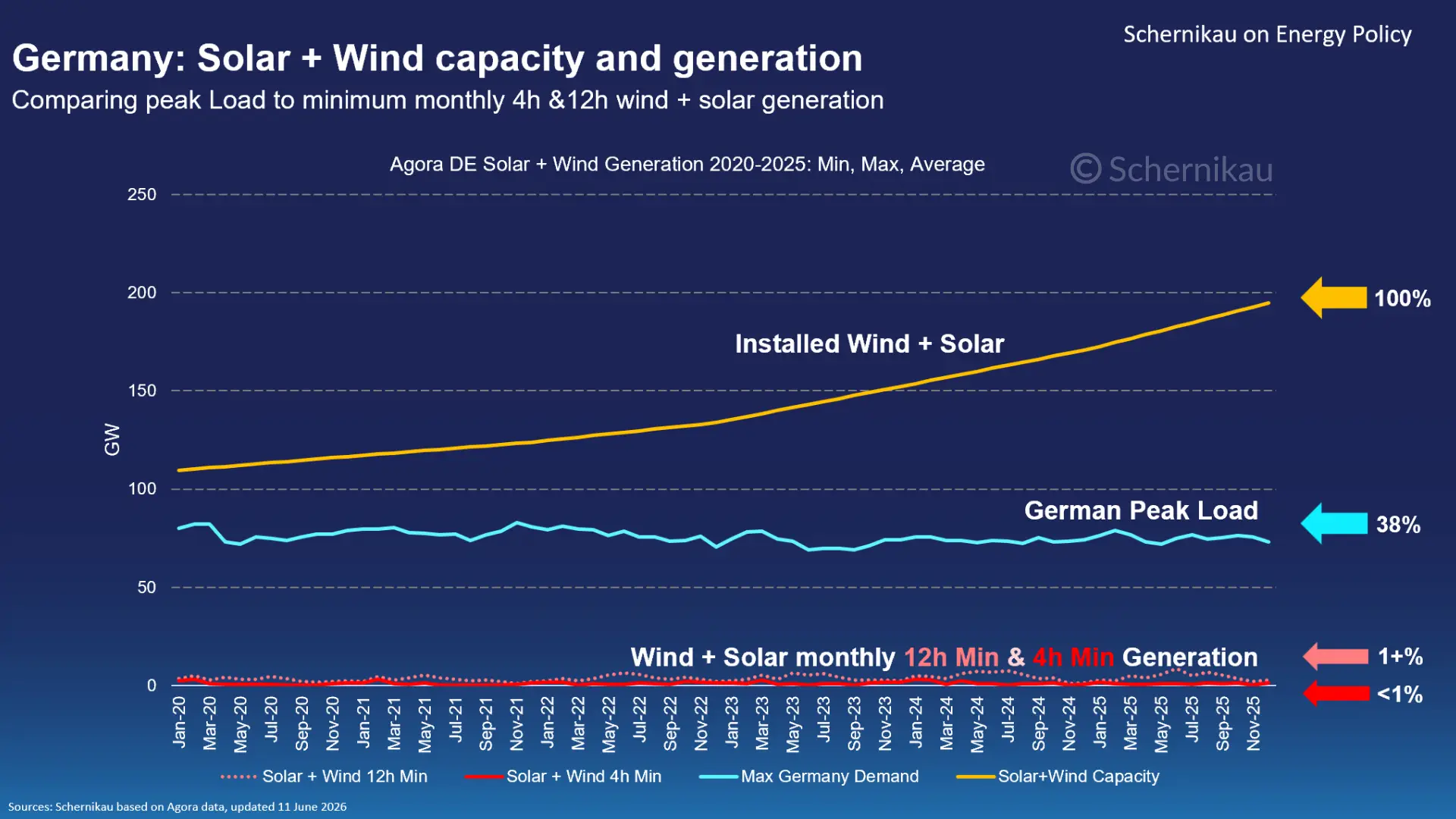
Figure 3: 4h, 12h minimum wind + solar generation in Germany | Sources: Schernikau based on Agora dated updated 11 June 2026
A common misconception is that solar panels and wind turbines + batteries simply replace conventional power plants. While they can generate electricity, they do not inherently provide all the physical services required to operate a stable and reliable grid.
What this “digital” solar, wind or battery electricity does not provide:
• System strength and fault current
Large synchronous generators naturally provide the fault levels and system strength needed to keep grids robust during disturbances. Inverter-based solar and wind + battery systems do not inherently provide these characteristics, not only because they lack inertia.
• Inertia
Conventional generators contain large rotating masses that act like flywheels, helping stabilise the grid when supply or demand changes suddenly. Solar and wind + battery fall short here…
• Voltage, phase and frequency stability
Reliable grids require continuous control of voltage and frequency. Phase synchronisation ensures that all generators operate together at the same frequency and phase angle, allowing the grid to function as a single coordinated machine. Synchronous generators naturally support these functions, whereas inverter-based resources require additional equipment, controls, and software to replicate them with higher risk of faults or breakdowns. (see my blog Blackouts, what causes them?)
• Electricity on-demand
Electricity has value only when it is available when we need it. Because solar and wind is reliable on the weather, they do not align with demand patterns, requiring overbuilding, batteries, backup generation, or curtailment.
• Electricity where it is needed
Solar and wind generation is frequently located far from major population and industrial centres, resulting in a growing need for extensive transmission infrastructure to “move” electricity from where it is generated to where it is consumed.
• Simplicity?
As the share of solar and wind generation increases, maintaining grid stability becomes increasingly dependent on batteries, synchronous condensers, advanced power electronics, communication systems, and sophisticated control mechanisms… all of which were not previously required.
The challenge we are now “creating” is therefore not simply just generating electricity, but also delivering reliable electricity with the stability, resilience, timing, location, and system strength upon which modern economies depend!
3. What difference does battery storage make?
For a solar and wind + batteries system to provide reliable electricity, it must do three things at the same time:
This means the system must be built far larger than average demand would suggest. In Germany, average electricity demand is roughly 60 GW, peak power demand (the highest demand during the year) is over 80 GW. In Germany installed solar and wind capacity now exceeds 200 GW! In other words, the system exceeds average demand threefold, all in an attempt to compensate for its intermittency. How successful?
A new analysis from September 2025 by the German Aerospace Center [6] identified December 2007 as a 15-day period of little or no solar and wind simultaneously. For your information, Ruhnau Qvist 2022 identified a period of 60 days of limited solar and wind in all of Europe during December/January 1996/1997 [7].
Then how can the claim that solar and wind + batteries are competitive with a dispatchable coal or gas power plant be correct? It cannot, the claim is untrue.
The amount of solar and wind overbuild combined with batteries required just to overcome a 12-hour Dunkelflaute or a 12-hour windless night is economically and environmentally unviable. (figure 4) This is also true for “high-quality resource regions” such as California, the UAE, or South Africa, as claimed by IRENA. Obviously, to overcome a 15-day or 60-day period of low solar and wind, when no batteries can be charged either, the already dire situation would become even more extreme.
The IRENA’s analysis assumes, and then models under “favourable resource conditions”, unspecified, but clearly limited, levels of solar and wind overbuild together with only 4-hour battery storage and compares the resulting system to dispatchable coal, gas, or nuclear power stations in terms of reliability and availability. It then estimates the cost of such an insufficient system and claims it is cost competitive.
Such a comparison is highly misleading because the reliability characteristics are fundamentally different, not to mention the disclaimers made in this regard (see paragraph 1). IRENA also only assumes a 10% “roundtrip energy cost” for batteries, which has been disproven and could reach 20-30% at battery system level.
The undisputed fact that solar and wind based systems become more expensive the higher their penetration (see my blog Rethinking the cost of electricity) into a given system, is entirely ignored by the IRENA’s number. The statement “the firm LCOE should be viewed as an upper bound on the profile costs associated with variable renewables” is incorrect.
Now, the discussion thus far has focused on reliability…but reliability is only one side of the equation and does not come for free!
Even if we assume that enough solar panels, wind turbines and batteries could eventually be built to provide on-demand, reliable 24/7 electricity 365, we should have a look at the economic and environmental cost of following through on this “idea”.
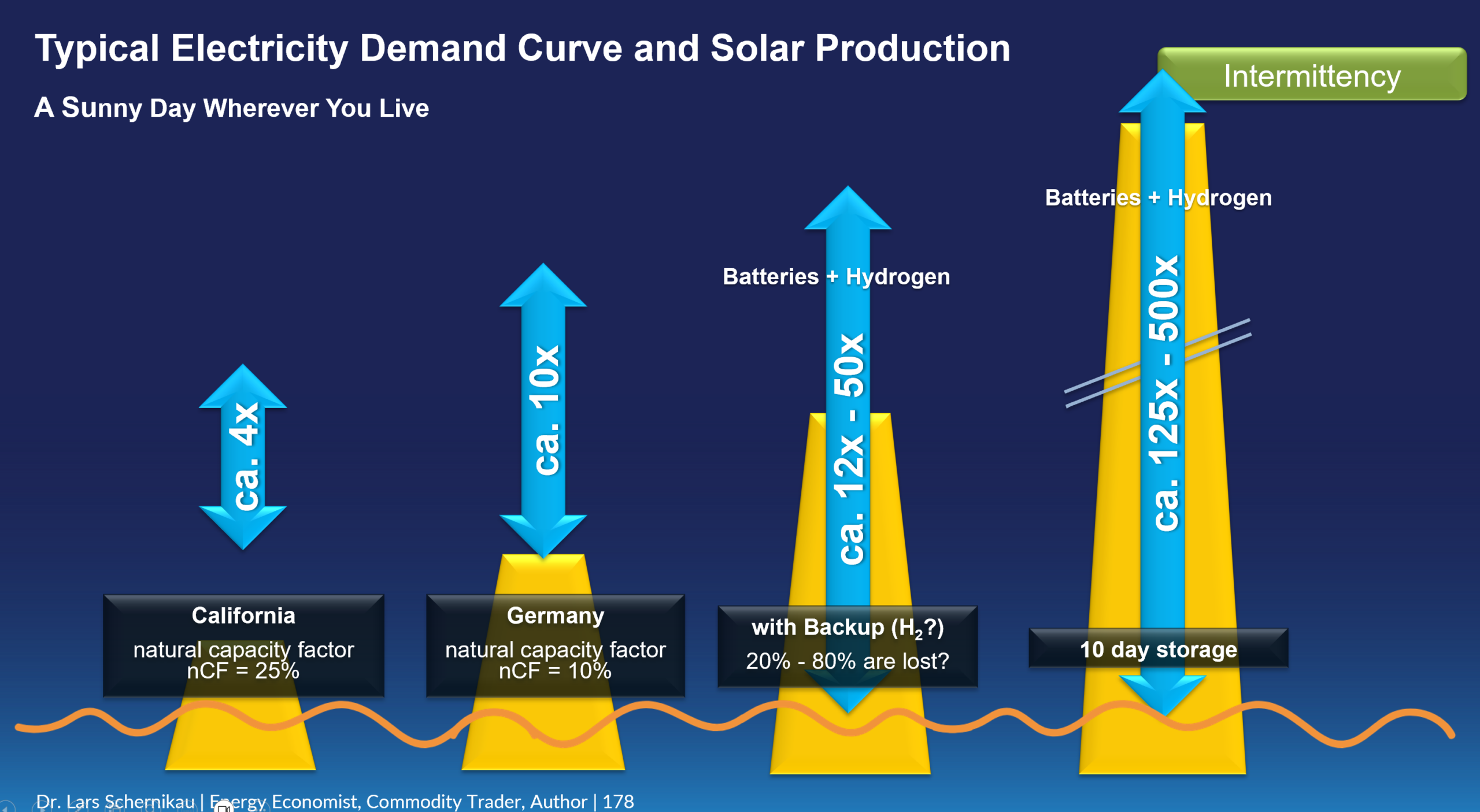
Figure 4: Illustrating solar overbuild for Germany | Source: Schernikau
4. Is the utility-scale batteries solution really clean and elegant?
Every battery begins its life in a mine.
Every solar panel, wind turbine and battery requires materials, energy, manufacturing, transport, land utilization and ultimately replacement. Before a battery can store electricity, vast quantities of raw materials must be extracted, processed, transported and manufactured using large amounts of energy.
So as you can see, the environmental and economic realities behind utility-scale battery systems are therefore rarely as simple as the public narrative suggests and I believe these realities deserve closer examination.
Utility-scale battery systems can serve the grid in many ways, but what is not often discussed are the realities or externalities surrounding them. Therefore, let’s condense and list those realities in 10-points (see my blog – Pros and Cons of Utility-Scale Battery Storage):
How long- Utility-scale batteries gradually lose capacity as they age and are typically expected to last around 10–13 years before requiring significant refurbishment or replacement.
b) How efficient – Batteries do not return all the electricity that is used to charge them. In real-world operation, utility-scale batteries typically achieve a round-trip efficiency (RTE) of around 70–80%, meaning that 20–30% of the energy is lost during the charging and discharging process.
6. Economic cost 2 – raw material or commodity prices, excluding gold, are at historically low levels in comparison to equities… something will have to give, my take is that commodity prices will rise impacting long-term battery costs.
7. Environmental cost –1 GWh of utility scale lithium-ion battery system requires ~0,7 million tons of raw materials (ores) to be mined, upgraded, transported, processed, and manufactured into these batteries.
a) China controls ~90% of battery cell component manufacturing (anodes, cathodes), ~80+% of battery cell manufacturing, and majority of raw material processing for batteries.
8. Energy cost – 1 GWh of utility scale lithium-ion battery system requires ~450 GWh of energy “investment” before the battery can be charged for the first time.
a) A standard Gigafactory, with an annual battery production capacity of about 50 GWh, would require over ~20 TWh of energy annually, if we include the embedded energy of the metals and materials consumed p.a. This compares to the city of Berlin in Germany consuming 12 TWh electricity annually.
9. How dense –100 Wh/kg energy density for utility-scale batteries at system level (not cell-level) is overestimated and very generous.
a)Today’s reality lies more around 50 Wh/kg,which is confirmed by various data points, and would then double the tonnage and energy estimates mentioned
b)The 1-ton battery, when charged, contains the same amount of energy as 40kg of coal,already accounting for 40% power plant efficiency.
10. How safe – A 1 GWh utility-scale lithium-ion battery system has explosive potential, equivalent to nearly 900 tons of TNT, with possibility for large explosions, fires and clouds of toxic gas.
a) Recycling low value LFP batteries without cobalt or nickel, is uneconomical, and we can expect illegal “exports” and dumping.
The reality is that the scale of battery storage required to make solar and wind more reliably available, comes with significant economic and environmental costs.
Utility-scale batteries are far from a “clean and elegant” solution!
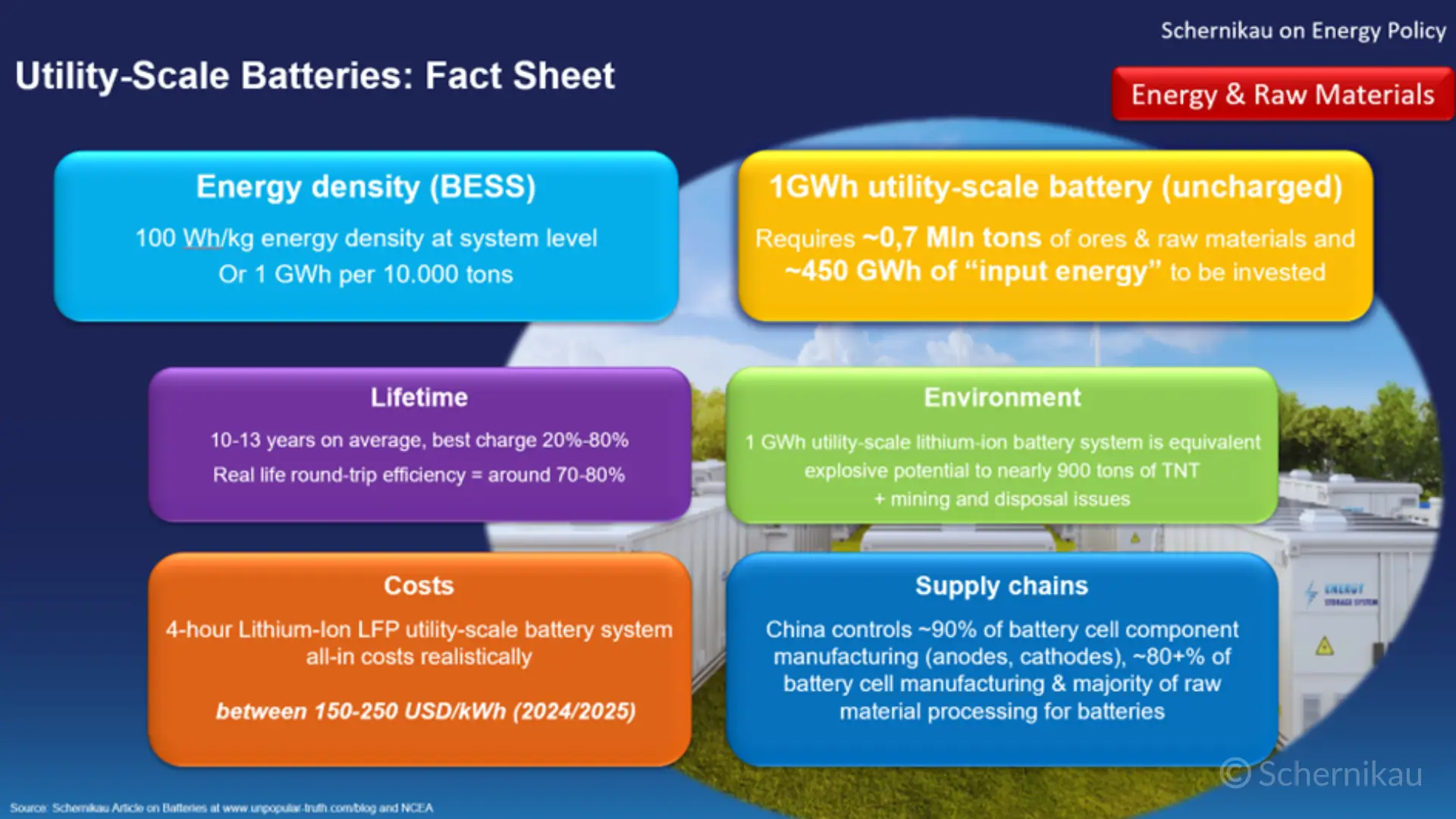
Figure 5: Utility-scale batteries facts | Source: Schernikau
5. Critical thinking is supported by questioning…
For the sake of critical thinking I want to leave you with a couple of additional questions that deserve our consideration:
I hope my questions remind us that evaluating an energy system requires looking beyond a single cost metric or modelling result… to consider the bigger picture.
Remember, the three fundamental reasons, why solar and wind photovoltaic (PV) based systems cannot ever be a viable alternative to conventional power at grid scale (see my blog- Are Wind and Solar up for the challenge?)
These result in the requirement of vast ancillary systems and thus a low net-energy efficiency at system level.
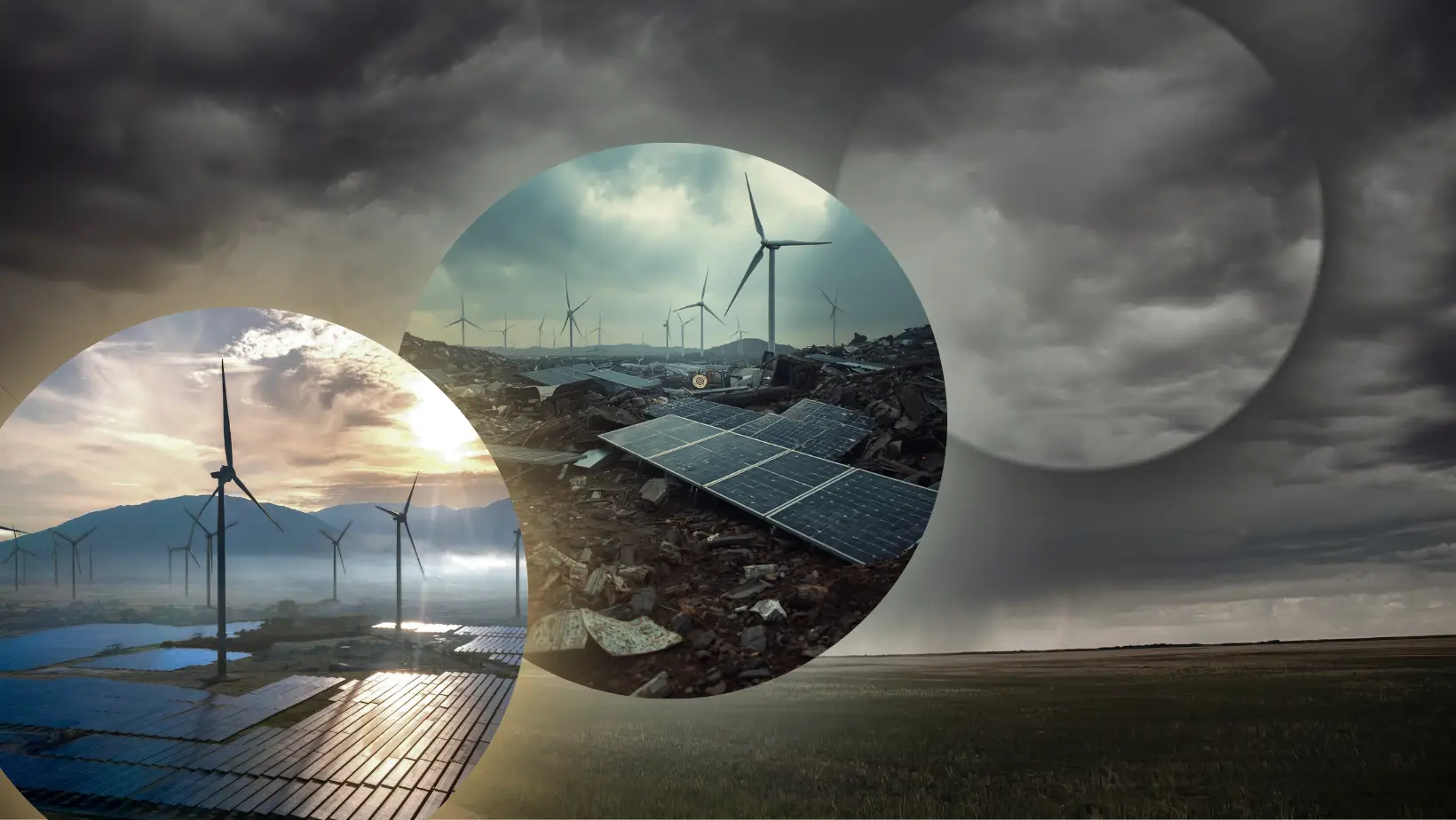
Figure 6: Low energy density | Short operational lifetime | Intermittency
Summary
At first glance, the “idea” sounds compelling…I mean if solar and wind + batteries can provide reliable electricity at costs comparable to conventional power plants, then the path forward appears obvious.
But throughout this blog we have encountered a recurring problem.
Generating electricity is not the same as delivering electricity when it is required.
A modern society does not run on annual averages, but rather on reliability and minutes or even seconds of peak power demand. Homes expect the lights to switch on at the flick of a switch just as businesses expect machines to operate when production starts at the beginning of a shift. A data center is expected to be ready when the enquiry arrives from your laptop. Hospitals, airports, data centres and factories expect electricity every second of every day, 365 days, and that is where the IRENA ‘s analysis falls short.
It appears that IRENA’s claim of firm 24/7 “renewable” energy is based on the analysis result stated as “In the United States, new combined-cycle gas turbines have reached a record USD 102/MWh – broadly in line with firm solar and wind costs at 90-95% reliability in high-resource regions”.
The problems with the IRENA analysis are blatantly clear
The fundamental question is not whether solar and wind + batteries can generate electricity. They clearly can. The question is whether they can provide the level of reliability modern economies require without imposing ever-increasing economic, environmental and system costs. They clearly cannot.
For critical infrastructure such as large data centres, even 99.9999% uptime is often the minimum requirement (according to IEA [8]). Today, that level of reliability can only be provided by dispatchable generation technologies such as coal, gas, nuclear, hydro and biomass. Attempting to replace dispatchable generation entirely with solar and wind + batteries leads to rapidly escalating complexity and cost. (also see my blog – Rethinking the cost of electricity).
This debate is not about solar panels, wind turbines, nor batteries. It is about how we provide reliable, affordable electricity to the people, businesses and industries that depend on it every day, with the least environmental impact. The debate is also about the expectation that professional organizations such as the IRENA provide us with reliable and truthful analysis, at least directionally.
We can all have different opinions, but the claim that solar and wind + batteries provide 24/7 reliable power is incorrect!
As we shape the future of our energy systems, we should be careful not to confuse aspiration with reality. Good energy policy begins by asking the difficult questions, acknowledging the unpopular truths and trade-offs and following the evidence wherever it leads.

Links and Resources
[1] IRENA: 24/7 Renewables: The Economics of Firm Solar and Wind. April 2026. (link)
IRENA: Renewable Capacity Highlights. March 2026. (link)
[2] Bloomberg: Iran War Shows Fossil Fuels No Longer Offer Security. Clean Energy Can – Bloomberg.” Accessed May 18, 2026. (link)
Financial Times: “FT: The Dawn of 24/7 Solar Power.” April 2026. (link)
[3] Patel, Anika. “Chart: Why China’s Solar Boom Is Slowing Down.” Carbon Brief, June 5, 2026. (link)
[4] Masdar | UAE President witnesses launch of world’s first 24/7 Solar PV, Battery Storage gigascale project to be built in Abu Dhabi (link)
[5] CNN, Nourhan Elkallawy. “Rare Snow and Hailstorms Cover Saudi Desert.” CNN, January 2022. (link)
[6] Scholz, Yvonne. Dunkelflaute and Long-Term Electric Energy Shortage Events in Europe. German Aerospace Center (DLR), 2025. (link)
[7] Ruhnau Qvist 2022: Storage Requirements in a 100% Renewable Electricity System: Extreme Events and Inter-Annual Variability.” Environmental Research Letters 17, no. 4 (2022): 044018. (link)
[8] IEA: Global Energy Review 2026 – Analysis. 2026. (link)
[9]“BNEF: New Energy Outlook 2026.” BloombergNEF, May 2026. (link)
Footnote:
1) One example of how unpredictable solar and wind in combination are, even for an entire month is Poland: Poland’s grid operator PSE announced on 15 June 2026 that during the month of May coal burn increased over 10% y-o-y to about 58% generation share as wind and gas generation decreased. Platts reported that curtailment of solar and wind increased 22% y-o-y. The average spot price rose 8% y-o-y despite data showing that Poland recorded 63 hours with negative spot prices in May, up from 54 hours in May 2025.