

If you want to learn about what the “Primary Energy Fallacy” is and why I believe it is a misaligned discussion when thinking about “modern electricity”, this is the blog post for you!
I want to ask you a question we don’t usually think about when we flip a light switch or fill up a tank…and that is, where does the energy actually come from?
Sure, sunlight, wind, and even coal and gas are technically free, they are energy sources just sitting there in nature to be used… some facing more limitations than others. But turning them into power we can actually use to run Santa Claus’ chocolate factory or light our christmas trees? That’s a whole different story.
This is where the idea of primary energy comes in. It’s actually not about the electricity we see listed on our bills, but is really about all the raw energy we have to pull from nature, to process, convert, and deliver before we get anything useful, such as 24/7/365 electricity, every single second we need it. And once you start looking at energy this way, things get a lot clearer.
We often hear that solar and wind energy is “clean” and basically “free” and it does not have thermal losses like a nuclear or gas-fired power plant. But to make this wind and solar energy usable and reliable in the real world, we have to build enormous support systems, mine rare minerals, manufacture components, build storage, upgrade the grid, maintain everything, and then, eventually, dispose of it. It’s not just about a solar panel and a little breeze blowing over a turbine blade.
Now compare that to conventional fuels like coal or gas or oil… they might lose more energy during combustion in power plants or engines, but the upfront infrastructure is simpler, and the systems last much longer, with the average coal or gas plant running for a good 30-60 years, nuclear usually far longer. That is not nothing and this should be considered when speaking of “free” energy.
Understanding primary energy helps cut through the feel-good stats and get down to the physics. It assists in showing us the full cost of electricity (FCOE), time, money and materials used in making any source truly usable…and once you see it, you can’t unsee it.
That is why looking at the real problem with the “Primary Energy Fallacy” often used by supporters of grid-scale wind and solar, is worth it!
- What is primary energy, and the “primary energy fallacy”
- Primary energy refers to raw, unprocessed energy directly from nature like coal, oil, gas, uranium, a flowing river, sunlight, or wind.
- Electricity or final energy used for transport, by contrast, is a secondary form of energy, largely derived from primary sources. And currently, on average, electricity “consumes” about 40% of global primary energy. (Figure 1) The rest is required to enable transportation, heating, and industry.
- Electric power has little value in itself unless it has the right voltage, current, frequency and phase and unless it is available when needed.
This matters because electricity is often presented as the end goal, ignoring the massive effort it takes to get there.
Let us not forget that electricity is a service delivered to the consumer – it is kWh on demand 24/7/365 supplied by a thermal power plant rather than a product (just a kWh supplied by wind or solar).
Usable electricity has four main characteristics, none of which are shown by wind turbines or solar panels, but is presented by every single thermal power plant:
- Voltage → system strength; or Grid stiffness / electrical pressure
- Frequency → power balance; or the Instantaneous balance between power demand and supply
- Phase → synchronism; Alignment of generators and grid timing
- Current → Load flow; actual power flow through the network
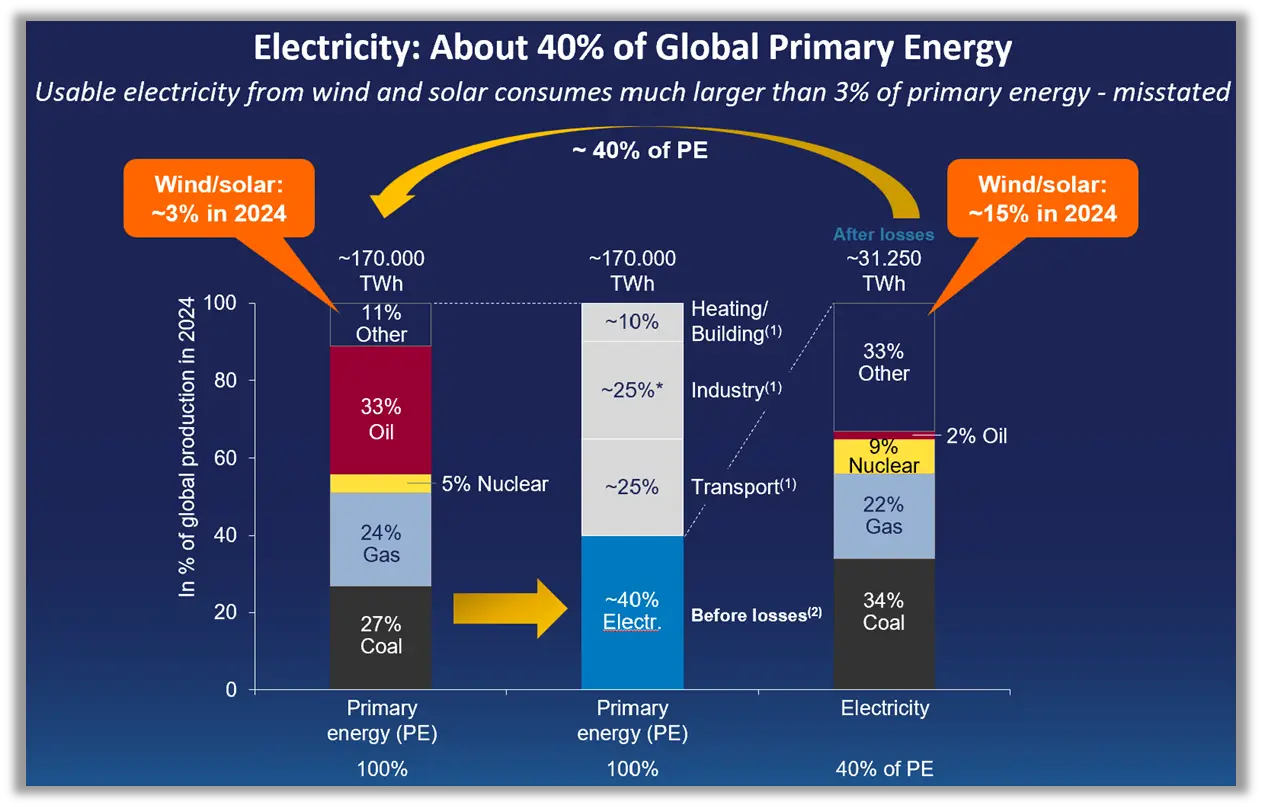
Figure 1: Electricity consumes about 40% of global primary energy but wind and solar’s share is underrepresented
(1) Only the portion of Industry/Transport/Heating that is not included under electricity; (2) assumed worldwide net efficiency of ~33% for nuclear, ~37-45% for coal, and ~42-60% for gas. With an assumed avg. ~45% efficiency => ~31.250 TWh becomes ~78.000 TWh or roughly 45% of ~170.000 TWh.* For simplicity, the ~10% of PE used for non-energy purposes (e.g. feedstocks, refinery losses, etc.) is included in the industry sector as it is closely linked to industrial processes.
Sources: Schernikau analysis based on IEA World Energy Balances 2024 (Sankey Diagram Tool) and Energy Institute Statistical Review of World Energy 2025 = ex BP
The “Primary Energy Fallacy” a term coined eloquently by many, is the idea that all primary energy from fossil fuels must be replaced by an equivalent amount of “renewable” energy. However, those people say, this would not be necessary because more than two-thirds of primary energy is lost as wasted heat during the conversion processes.
The misunderstanding occurs in the belief that wind and solar generate electricity without any losses (a secondary or tertiary form of energy) while coal, gas, uranium may have a high energy content but have “thermal losses” ~60-70% during processing. This PE fallacy argument is used for power generation and also for internal combustion engine vehicles (ICE) in a slightly adjusted form.
- Stated Primary Energy Fallacy 1: “The conversion of gas and coal to power results in a loss of around 60%. This means that one unit of primary energy from wind or solar, replaces two units of that of gas/coal”
- Stated Primary Energy Fallacy 2: “The conversion losses during end use in internal combustions engines ICE are also high. Electric motors are much more efficient. Most car engines ‘lose’ 70% of fuel energy, which means that one final energy unit of electricity replaces three units of gasoline/diesel”
Therefore, the argument goes, one should not compare or even look at primary energy. Because, we are told, wind and solar are “practically limitless” and they give us usable electricity or final, usable energy at 2-3x higher efficiency than oil, coal, or gas. To be clear, it is correct that coal, gas and oil suffer thermal losses and it is correct that wind and solar generate electricity showing little thermal losses. But there is so much more to consider making the argument invalid!
The “Primary Energy Fallacy” relies on fundamentally flawed assumptions about the net energy efficiency of wind and solar at system level. Correct is that useful, final energy (i.e., electricity or transport) derived from wind and solar is LESS net energy efficient and therefore LESS primary energy efficient than oil, coal, or gas at system level.
Note: the primary energy reporting by energy agencies such as the IEA is misleading, as it appears that wind and solar consume only a miniscule portion of primary energy while in effect a much larger share of primary energy is required to make wind and solar power usable for consuption. More detail in my article “Why Primary Energy is still King”. It may be too much to ask for the energy agency to adjust their accounting, i.e. include embedded or grey energy, is it is very complex and varies by region. Just be aware that the concept described herein will be hidden in the primary energy statistics and will not be obvious. Many, not all, primary energy studies assume close to 100% system level efficiency of incoming solar power converted to usable electricity.
2. “Free” energy is not free! Extraction vs. Usable power
The Energy Institute 2025, former BP, reports 2024 [1] misleadingly because they don’t have a better way to report what it takes to create “usable” electricity.
- 4,655 TWh of primary energy solar and wind is turned into 4,623 TWh of wind and solar electricity (thus, wrongly assumed almost 100% efficiency)
- 8,500 TWh of primary nuclear energy is turned into 2,800 TWh of nuclear electricity (accounting for the thermal losses)
- We cannot show this simple metric for coal or gas because only a portion of coal and gas are converted to electricity. Significant portions or coal and gas as primary energy are converted into heat or industrial energy and are used for chemical conversion purposes (i.e. steel making or fertilizers).
Coal, gas, sunlight, and wind are all to be found free in nature, but turning them into usable, reliable power that is available 24/7/365 every single second always costs energy, materials, money, and human ingenuity. Only electricity that has the correct voltage, frequency, phase, and current is useful, none of which are provided by a solar panel or a wind turbine, but they ARE provided by a thermal power station.
Coal, or gas already carry concentrated energy in the fuel itself. To make the fuel useful, we must mine, transport, and combust it in a power plant, which itself requires significant steel, concrete, and machinery. Roughly 60% of the fuel’s energy is lost during thermal conversion, and the supply chain for mining and transport consumes additional energy. Yet a coal- or gas-fired power plant has an operational lifespan of around 30-60 years, providing steady, dispatchable power from a single site with relatively modest infrastructure replacement requirements, but a continues inflow of combustible fuel.
Wind and solar, by contrast, start with diffuse energy. Their “fuel”, sunlight and moving air (wind), is free and “renewable” but low in density. To make it usable, much more energy and materials must be built in through a vast industrial chain. Also, the electricity they provide needs to be “conditioned” to the correct voltagae, frequency, phase, and current.
There are three main issues at the core of the “energy transition” towards wind and solar. I explore these in detail in my article “Are wind and solar up for the challenge”.
(a) Energy density, (b) Intermittency, (c) Operational Lifetime
The argument lies in that we have technology to overcome the above-mentioned issues relating to low energy density, short lifetime, and intermittency. “Smart” systems, storage, or demand response are often named as solutions… well, let’s have a look at what the cost and primary energy impact is in this regard.
First “input energy and input raw materials” you can clearly see that the dramatic overbuild required for wind and solar installation has a direct impact on the input energy and input raw materials required to build the equipment used to “collect” the free wind and solar power from nature. This energy and raw material input far exceeds that of building conventional thermal power plants or producing “free” coal, gas, oil, or uranium available for “combustion”. This is entirely unaccounted for in the “primary energy fallacy calculations” and of course also in any primary energy reporting.
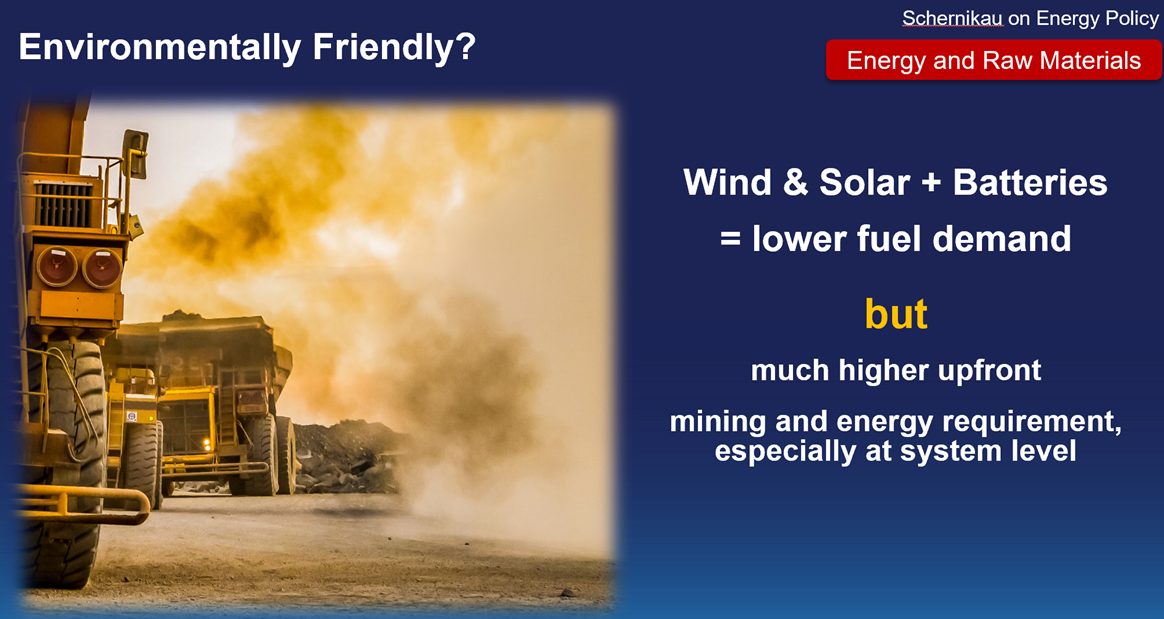
Figure 3: System level view of wind and solar + battery systems
Second “Ancillary Systems” it becomes obvious that a large array of ancillary systems is required to integrate wind and solar into our existing systems and to at least partially overcome the natural disadvantages of wind and solar namely: low energy density, short lifetime and intermittency. These systems are required to “convert” wind and solar power into power with the correct voltage, frequency, phase, and current. Such systems are not included in any reporting or calculations, it is simply too complicated.
These ancillary systems required include:
- A vast overbuild of wind and solar to overcome the low natural capacity factor, resulting in low net load factor, as well as the intermittency and unpredictability challenges and to charge any storage
- Short duration energy storage, in the form of batteries, to overcome short duration fluctuations and to balance the grid
- Long duration energy storage, envisioned in the form of hydrogen, to overcome days and weeks of insufficient combined wind and solar generation
- Backup thermal power stations on standby when needed, in Germany 12-20GW of gas is required by 2030, in the future this backup is supposed to run on hydrogen
- A vastly more complex and larger transmission network and integration infrastructure also for “conditioning” wind and solar power
These 5 systems are all required to replace one existing coal or gas or nuclear power station and are required to make wind and solar electricity useful for consumption. They have a low net-load factor (they are not used much) contributing to the cost increase and net energy INefficiency, Furthermore, these 5 systems – except for the thermal power plants – have a short operational lifetime, so they have to be replaced every few years, far more often than the conventional thermal power system alone (Figure 2). A similar but yet amended logic applies for internal combustions engines vs electric vehicles, which I explain here “EVs for all: EV’s impact on power systems and supply chains”
Each of these steps consumes more primary energy, often mined or produced in other countries such as China, entirely hidden from national energy statistics or the “Primary Energy Fallacy” argument.
In short, every form of energy demands an energy investment to become useful. Coal’s and gas’ costs lie in their fuel cycle and continues fuel requirement, where solar and wind’s costs lie in their low energy density, intermittency, and short operational lifetime and the resulting system impact, reminding us that “free” energy always comes with a bill and a direct impact on the net energy efficiency.
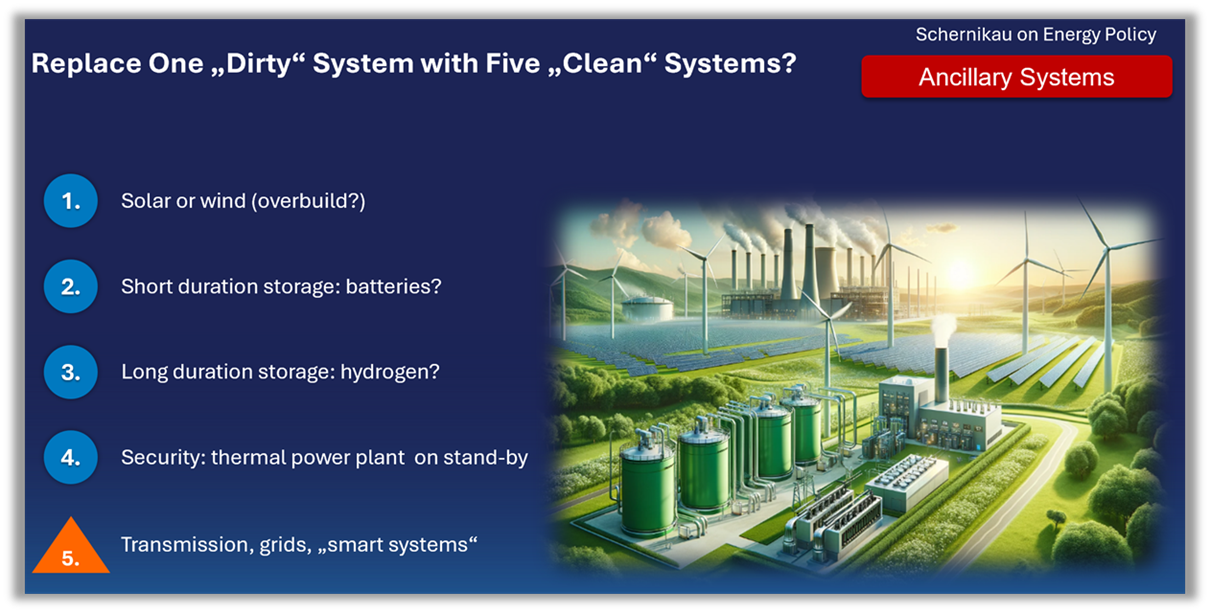
Figure 2: Ancillary Systems: Replacing one “dirty” system with five “clean” systems?
3. How much do we really get?: Useful energy vs. energy invested
Not all energy sources deliver the same bang for the buck…or for the land, materials, money, and time we invest into them. It’s easy to assume that once a solar panel or wind turbine is installed, the job is done. But when you look at the ancillary systems required and how much usable energy each system actually consumes and “produces” over its lifetime, the story gets more complicated.
In this section, I want to illustrate (nothing but illustrate as this is not about exactness but about the concept) some key numbers such as natural capacity factors, lifespans and energy density to show just how different solar, wind, and coal (or gas) are in practice. I hope to show you why some systems need to be replaced more often, why others need massive overbuilding, and why something like a single coal or gas plant can still outperform entire networks of wind and solar plus their required ancillary systems when it comes to reliability, affordability, and longevity.
Let’s look at what it really takes to turn each of these sources into a dependable power source.
Solar Power
- Natural Capacity Factor: ~10% in Germany, ~25% in California, Australia, South Africa (Bolson et al 2022 [2])
- Power Density: limited to 5-7 MW/km2 (or W/m2 [3, 4]), overbuild requirement – if you want to have 10 days of German generated solar power in storage ready for usage using batteries being 80% net energy efficient, you would need to overbuild 10 x 1.25 x 10 = 125x … if you use 20% net energy (in)efficient hydrogen storage this number would increase to 500x…. yes hundreds of times of overbuild is required.
- Lifetime: Typically 12–15 years at grid scale, far less than the claimed 25–30 with a replacement rate of ~ 3-4x more often than coal or gas plants (Libra et al 2023 [5], see also [6, 7])
- Mining, Processing, Transport, and Manufacturing: Fossil-powered, for instance furnaces for silicon
Wind Power
- Natural Capacity Factor: ~22% global average, good regions may reach 35+% (Bolson et al 2022 [2] and see real vs. planned natural capacity factors from the UK [8])
- Power Density: Limited to 1–2 MW/km2 [3]
- Lifetime: limited, especially offshore, often just 10–20 years with a replacement rate of ~ 2-4x more often than coal or gas plants (IER 2024 [6])
- Mining, Processing, Transport, and Manufacturing: Fossil-powered, especially furnaces for silicon
Coal (or gas) Power
- Natural Capacity Factor: 98+%, dispatchable, available on demand. Utilization is much lower, maybe even below 60%
- Operational Life: 30-60 years with upgrades
- Infrastructure: One or gas coal plant can replace an entire system of wind and solar, storage, and grid upgrades
- The coal needs to be mined and transported during the entire operation.
Note on eROI: The eROI or net energy efficiency numbers are based on the stated reports. It must be noted that more research is required for more reliable system level eROI numbers, so please consider the numbers indicative and illustrative only. Our book “The Unpular Truth…. about Electricity and the Future of Energy” discussed eROI in more detail.
| Metric | Coal/gas (Thermal) | Nuclear | Solar PV (Utility) | Wind (On/Offshore) |
|---|---|---|---|---|
|
Lifespan (real-world) |
30–60 yrs (extendable) |
40–70 yrs (with refurbishments) |
12–15 yrs avg
(repower ~15) |
10–20 yrs |
|
Natural Capacity Factor (net load factor depends on utilization) |
98+% |
98+% |
10–25% |
15–40% (some offshore higher) |
|
Dispatchability |
Full |
Full (base load, steady output) |
Intermittent |
Intermittent |
|
Energy Return on Investment (eROI, full system) [9][10] |
25-30 : 1 |
>75 : 1 |
5–10 : 1 (lower with storage at system level) |
10–20 : 1 (lower with storage at system level) |
|
Material requirement for capacity (per TWh) [11] |
Very low
~1–2 kt steel, 0.1 kt copper
|
Low ~2–4 kt steel, 0.2 kt copper, high concrete
|
Very high ~340–560 kt steel, 5–170 kt copper, rare earths, silicon + what is required for all ancillary systems [1]
|
Very high ~30–50 kt steel, 3–6 kt copper, rare earths + what is required for all ancillary systems [1]
|
|
Material requirement for operation |
Very high, but low cost per TWh |
Very low |
Close to zero |
Close to zero |
|
Replacement Frequency (per 40-year period) |
1× |
1× |
Assume 3× full rebuilds |
Assume 2× full rebuilds |
|
Waste / Disposal Complexity |
Moderate (ash handling) |
High containment, but small volume |
Large-scale disposal / recycling? |
Large-scale disposal / recycling? |
|
Total System Cost |
Very low, relatively constant |
Low, reducing the more you have |
Very high, increasing the more have |
Very high, increasing the more you have |
4. Summary: The “primary energy fallacy” is a fallacy
Here is what I hope you take away from this blog post…
“The Primary Energy Fallacy” is a fallacy in itself because it uses inappropriate assumptions.
We are often told that solar and wind are clean, free, efficient, and the future. But when you really look at what it takes to turn those natural flows into dependable, usable 24/7/365 on demand electricity at the correct voltage, frequency, phase, and current, the story is not so simple. Yes, the sun and the wind are free, same as coal or gas, but making them work at scale requires a very large amount of infrastructure, energy, money, and raw materials.
This is why the idea of primary energy matters. It forces us to look at the full picture, from raw extraction to usable output, not just the electricity that shows up on a meter. It helps explain why conventional fuels fuels such as coal, gas, or nuclear despite their obvious drawbacks, still deliver more energy per unit of investment, and why global energy use keeps rising even as wind and solar expand.
What makes the “Primary Energy Fallacy” a fallacy is that it only looks at the combustion part but not at the system level, the only relevant way to compare different electricity generating systems. When looking at system level, wind and solar are a digression for mankind back, towards a low net-energy-efficient system that starves us of energy (see our peer reviewed article Schernikau et al 2022 “Full Cost of Electricity “FCOE” and Energy Returns “eROI” [12] for more detail.
Solar panels and wind turbines do not last as long as people think, they need to be replaced far more often than coal or nuclear plants, and they need vast overbuilding. Wind and solar also don’t “produce” usable electricity for our grids, voltage, frequency, phase, and currently don’t match grid requirements. That means more mining, more manufacturing, more transport, and eventually, more waste. And, as all of this comes with an environmental cost from damage caused by raw material extraction to the growing challenge of disposing of old blades and panels, I want to ask you…What exactly is the motivation behind the push for wind and solar energy?
What is worse, is that much of this effort and energy is not even accounted for properly in national statistics by making use of the levelized cost of electricity (LCOE) instead of the full cost of electricity (FCOE) when evaluating the cost of power to a country.
In short, the more I have looked into it, the clearer it becomes. Nature gives us the resources for free, but turning them into something we can actually rely on is always expensive, messy, and energy intensive.
Whether it is coal or sunlight, there is no such thing as a free kilowatthour that is useful for us.

Links and Resources
[1] Statistical Review of World Energy – (Link) page 62
[2] Bolson et al 2022: Capacity Factors for Electrical Power Generation from Renewable and Non-renewable Sources.” Proceedings of the National Academy of Sciences 119, no. 52 (2022): e2205429119. – (Link)
[3] Miller, Lee M., and David W. Keith. “Miller Keith 2019 – Observation-Based Solar and Wind Power Capacity Factors and Power Densities.” Environmental Research Letters 13, no. 10 (2019): 104008. – (Link)
[4] Schernikau, Lars, and William Smith. “How Many Km2 of Solar Panels in Spain and How Much Battery Backup Would It Take to Power Germany.” SSRN Electronic Journal, ahead of print, April 2021. – (Link)
[5] Libra et al 2023: Reduced Real Lifetime of PV Panels – Economic Consequences.” Solar Energy 259 (July 2023): 229–34. – (Link)
[6] IER: Wind Turbines and Solar Panels Are Aging Prematurely.” February 2024. – (Link)
[7] V, Nikky. “Broker’s Key Takeaways From kWh Analytics’ 2025 Solar Risk Assessment.” kWh Analytics, July 2, 2025. – (Link)
[8] Heffer, Greg. “Ed Miliband Admits Wind Farms Will Generate Less Power than Thought.” Mail Online, October 2025. – (Link)
[9] World Nuclear Association, Energy Return on Investment, updated 3 December 2024. – (Link)
[10] Energy intensities, EROIs (energy returned on invested), and energy payback times of electricity generating power plants by D. Weißbach et al. (2013) – (Link)
[11] World Nuclear Association (2024), Mineral Requirements for Electricity Generation – (Link)
[12] Schernikau, Dr Lars, William Smith, and Rosemary Prof. Falcon. “SSRN: Full Cost of Electricity ‘FCOE’ and Energy Returns ‘eROI.’” Journal of Management and Sustainability 12, no. 1 (2022): p96. – (Link)