
In 2008 I wrote my first book, “The Renaissance of Steam Coal”. At the time the world produced a little over 6 billion tons (Bt) of coal annually, of which about 800 million tons (Mt) were being transported across oceans. Germany was the 5th largest global coal importer, and in the United States the narrative of “war on coal” just started sticking its ugly little head out. Meanwhile China was quietly ramping up consumption from about 3 Bt to currently almost 5 Bt annually.
Fast forwarding nearly two decades and a couple of billion tons later it’s 2026, global coal consumption has climbed to about 9 Bt, [1,2] and seaborne trade has almost doubled to roughly 1.5 Bt. So, the obvious question is: was the observation of a “renaissance of coal” premature… or are we actually still undergoing it? Or is it time to rather call for a “new” renaissance of coal? This might sound a bit dramatic, but I would argue that there are good reasons why coal continues to matter, economically, especially from an energy security perspective, and why coal’s importance will increase, rather than diminish.
Bloomberg just wrote “Europe Boosts Coal-Fired Power as Gas Prices Rally”. So what is it about this dirty black rock? Why does it appear to come to the rescue at every sign of geopolitical turmoil? [3]
Here an unpopular truth… coal remains the single most important fuel and chemical reductant for producing the physical materials of modern civilization. Steel, cement, metals, and industrial heat… and coal sits somewhere in the middle of that supply chain. When it comes to electricity, coal is still the largest single source of power globally.
So the real question isn’t whether coal exists or whether it matters, clearly it does. The question is something else: do we actually understand what coal does… and what it doesn’t do? And do we understand why in fact we need coal more than ever and that we better start to work WITH coal and not AGAINST it?
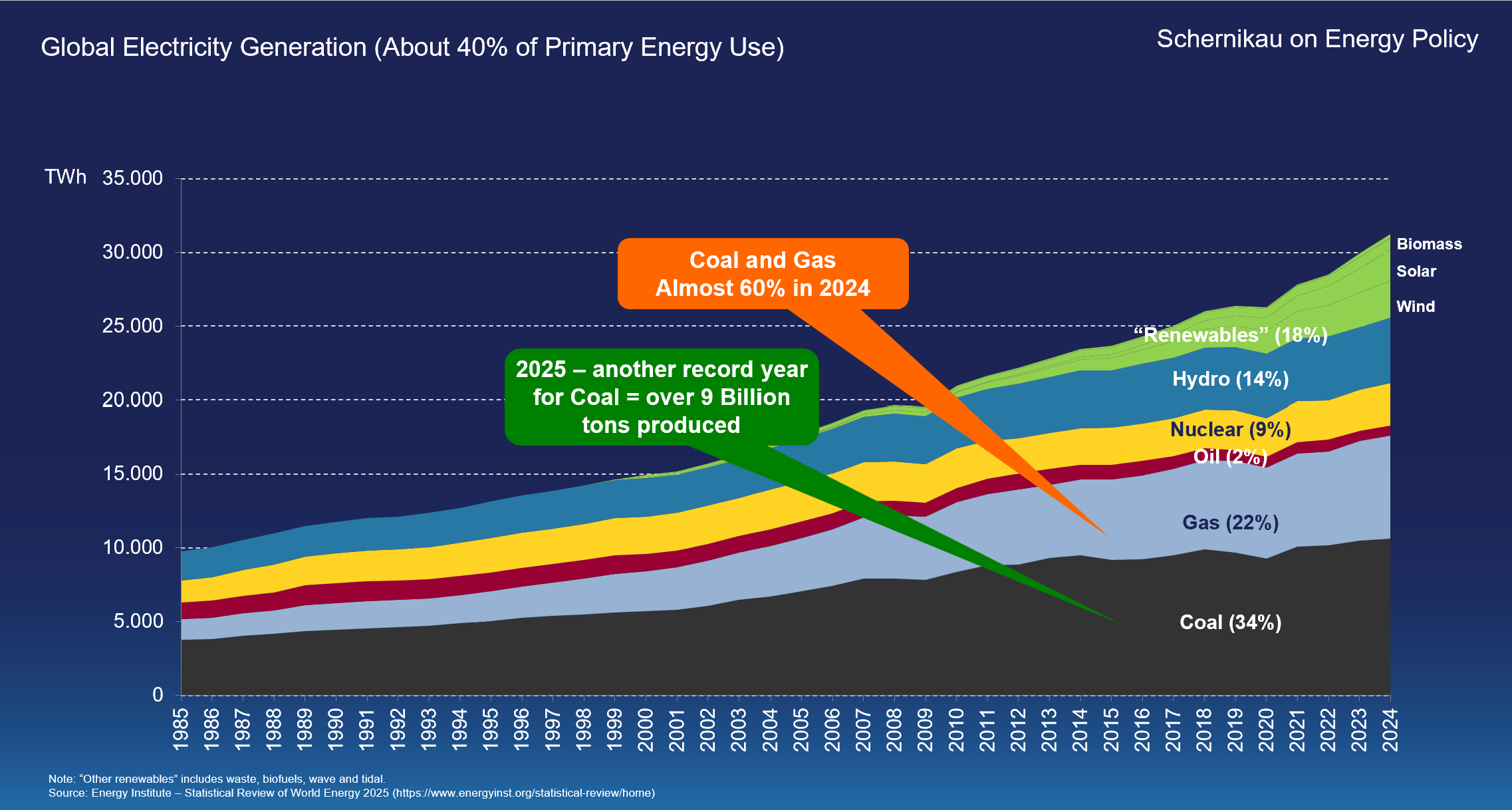
Figure 1: Electricity production by source | Source: Source: Energy Institute – Statistical Review of World Energy 2025
- Coal…What a misunderstood rock
Coal is like the geological equivalent of a battery that was charged by sunlight hundreds of millions of years ago. It is actually nothing more than swamp plants from the Carboniferous Period and other ancient eras, buried under layers of sediments, slowly transformed by pressure and heat until the carbon formed coal seams. Today those seams are mined all over the world while giant ships transport it to power plants, steel mills, and silicon smelters which supply us with solar panels and computer chips.
There are numerous advantages to using coal as it is dense, stable, and easy, safe and secure to store… it is cheap, carries no risk of exploding, doesn’t need a tank, and it can sit unused for years.
The energy that coal releases comes for the plants it was made of, captured from the sun many, many years ago. Coal run turbines to make electricity and the carbon in coal turns iron ore into steel in blast furnaces or reduces silicon ore to silicon…so in a quiet way, coal powers a surprisingly large share of modern civilization: lights, railways, bridges, skyscrapers, wind turbines, solar panels, and the ships carrying the rest of the world’s commodities. Coal is not glamorous, basically fossilized swamp, but few materials have had and will continue to have a bigger impact on human wealth, health, and industrial development than coal.
Coal does not just provide electricity but the primary energy required to run our modern world (see Primary energy fallacy)
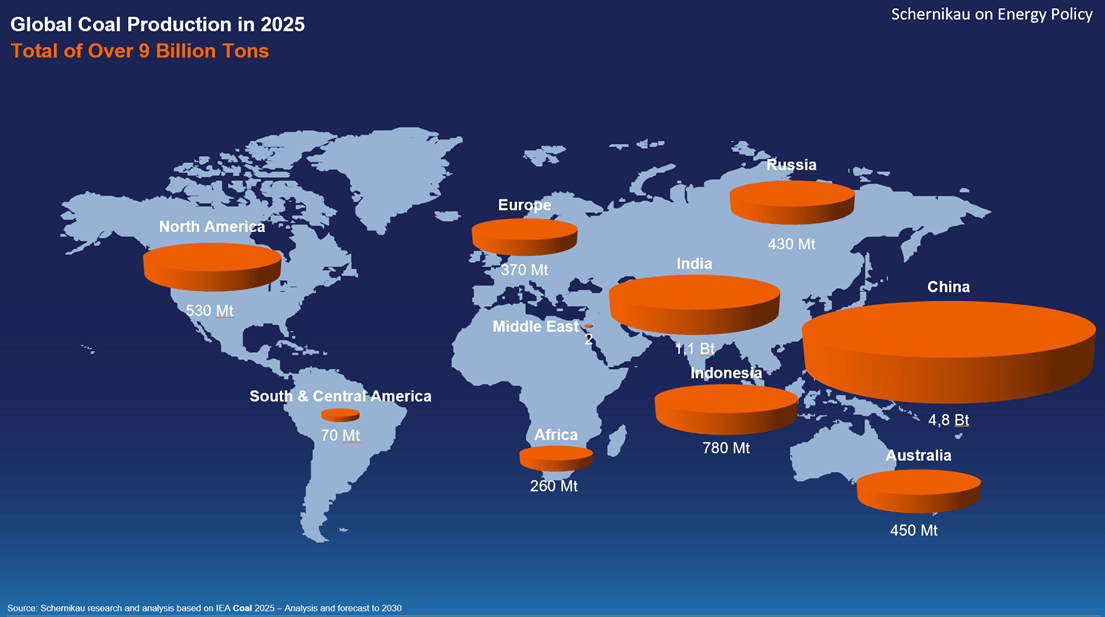
Figure 2: Global Coal Production
2. Where global coal supply meets demand
Coal is such a vast subject that deciding where to start feels like trying to measure the ocean with a teaspoon. Entire libraries could be written about it. So instead of drowning you in numbers, let me give you just enough to appreciate the scale of this subject. For those coal nerds among you just pick up one of my books on coal in your favorite online or offline bookshop. On Amazon just search “Schernikau” and “coal” and take your pick. Maybe this is for you “Economics of the International Coal Trade: Why Coal Continues to Power the World”.
Each year humanity extracts roughly 110 billion tons of resources [4] from planet Earth, everything from iron ore to sand to timber. Out of that mountain of material, coal alone accounts for about 9 Bt. [2] Not bad for a black rock that people have been burning since the Middle Ages.
Now, looking at global shipping. Of the roughly 12.5 Bt of goods transported across oceans every year, about 5.5 Bt or roughly 45%, are energy commodities: oil, coal, and gas. In other words, nearly half of what the world’s ships carry is simply fuel to keep modern civilization running. Coal makes up 1.5 Bt of that and luckily the Strait of Hormuz has little bearing on coal flows.
On the production side, China is the undisputed heavyweight, producing close to
- 5 Bt of coal annually, leaving a big gap between them and
- India with 1.1 Bt, followed by
- Indonesia with around 800 Mt, then Australia, the United States, and Russia.
For comparison, the European Union consumed roughly 300 Mt last year, and plans to “save the world” by replacing that coal with imported LNG.
When it comes to exports by sea, Indonesia clearly dominates with about 500 Mt of exports annually. Australia follows with about 360 Mt, then Russia at 200 Mt, with the US, South Africa, and Columbia trailing. Mongolia emerged as the land-based export champion with around 90 Mt moved mostly to China. The country may soon become the second-largest exporter of metallurgical coal in the world.
Occasional supply disruptions from “odd” government policy (Indonesia) or weather-related supply chain difficulties (Australia, South Africa), put short-term dents in the supply-chain, but never pose a serious threat to global supply. Only when Russian coal was sanctioned in the Western world following the Ukraine invasion coal markets were out of whack for some time. Under normal circumstances coal prices generally follow power prices, which tend to be driven by gas prices.
Finally, the import side of the ledger: in 2025, China again leads seaborne imports at roughly 550 Mt, followed by India with about 240 Mt. The ASEAN countries of Southeast Asia together import around 180 Mt, Japan 140 Mt, South Korea 100 Mt. [5] The EU imports roughly 120 Mt. Please remember that on average about 70% of seaborne trade is thermal coal for power plant use.
Global supply-demand balances emerge from a tug of war between domestic production and exports, and between imports and domestic consumption. Especially in China, India, Indonesia, the US and South Africa these dynamics will continue to influence prices and volumes available for seaborne trade. Domestic consumption growing faster than domestic production turned China from a coal exporter into the leading coal importer starting only in 2009.
So yes, the coal industry is enormous. These are just the opening paragraphs…if I kept going, the statistics would start needing their own postal codes.
Coal is a giant of global trade with about 1.5 Bt of coal transported across oceans each year, making it the second-largest bulk commodity after iron ore coming in at around 1.6 Bt annually.
It is interesting to note that almost 30% of seaborne coal is metallurgical coal, used for producing metals, steel, manganese, chrome, nickel, copper, zinc, and even silicon for computer chips and solar panels rather than for combustion in power plants. Coal‐to‐liquids (CtL) will increasingly gain importance not only in China with the approach of global peak production of conventional oil.
As a general rule, about 1.5 Bt of coal, roughly one-sixth of global production of 9 Bt, goes into metal production, including the electricity required for very energy-intensive industries such as aluminum production.
Coal is required as a feedstock for major industrial sectors with rough estimates of:
- Steel ~1.1 Bt
- Cement ~0.45 Bt
- Chemicals ~0.4 Bt
- Other industry ~0.9 -1.0 Bt (including CtL) and feedstock for fertilizers
This amounts to around 3 Bt of coal used directly by industry each year, not counting industrial electricity. Thus, about 1/3rd of all coal is used for industrial and metallurgical processes. That makes coal the single most important energy product and reductant for our entire material existence on Earth.
Why coal? For many industrial processes 600–1200°C heat, continuous operation, and cheap fuel is required, resulting in conditions where coal still often dominates, especially across Asia and Africa. There’s also a simple chemical reason. Coal contains solid carbon, which removes oxygen from metal ores:
Metal oxide + C → Metal + CO, this reaction is the foundation of modern metallurgy.
Coal is also crucially important for food security. Even if, globally, coal is the basis for “only” ~20% of hydrogen for ammonia production, it (1) dominates incremental industrial hydrogen in China, it (2) dominates coal-to-chemicals (ammonia, methanol), and it (3) dominates marginal supply security thinking. So coal’s system importance for fertilizers is larger than its share suggests (see box).
Note on fertilizers and coal:
Coal-based ammonia underpins roughly a quarter of global nitrogen fertilizer production, such as urea, ammonium nitrate, and ammonium sulfate. The math is simple, over 75% of Chinese hydrogen, the feedstock for ammonia, and thus all nitrogen fertilizer, is coal based consuming ~100 Mt p.a. Globally hydrogen is produced with gas ~70%, coal ~20%, and oil ~10%. Considering that ~50% of the global population depends on synthetic nitrogen fertilizer, removing coal would significantly disrupt global food supply, raising prices and increasing food insecurity for hundreds of millions.
simple: gas/coal/oil → hydrogen → ammonia → fertilizer
Chinese coal-based ammonia production
Coal (C) → hydrogen (H₂) via gasification
Hydrogen + nitrogen → ammonia (NH₃)
Ammonia + CO₂ → urea ((NH₂)₂CO)
Standard gas (methane) based ammonia production
CH₄ → steam reforming → H₂
→ H₂ + N₂ → NH₃
More trivia: The nitrogen in our fertilizers comes principally from the air. The Earth’s atmosphere is 78% nitrogen, but plants cannot use N₂ directly. Industry converts atmospheric nitrogen and hydrogen into ammonia using the Haber–Bosch process.
Around 6 Bt of coal goes into electricity generation, powering and heating cities, super markets, factories, and increasingly towards data centers. Since about 40–45% of electricity is used by industry, coal indirectly fuels industry even when it runs through a power plant first. Asia clearly is the biggest consumer of coal for electricity and Southeast Asia is growing especially fast.
Put together, about 5 Bt of coal, more than half of global production, ultimately supports industrial activity: steel, cement, chemicals, manufacturing, and industrial electricity.
In short: coal doesn’t just generate power. It helps build and even feed the physical world around us... without which you and I would be back in a cave playing hide and seek with our kids, maybe not a bad alternative.
The importance of coal for solar panel production is summarized in my blog post titled “Coal’s importance for solar panel manufacturing”. For those who enjoy the chemistry and physics behind it all, the technical details are explained in Schernikau’s Coal Handbook.
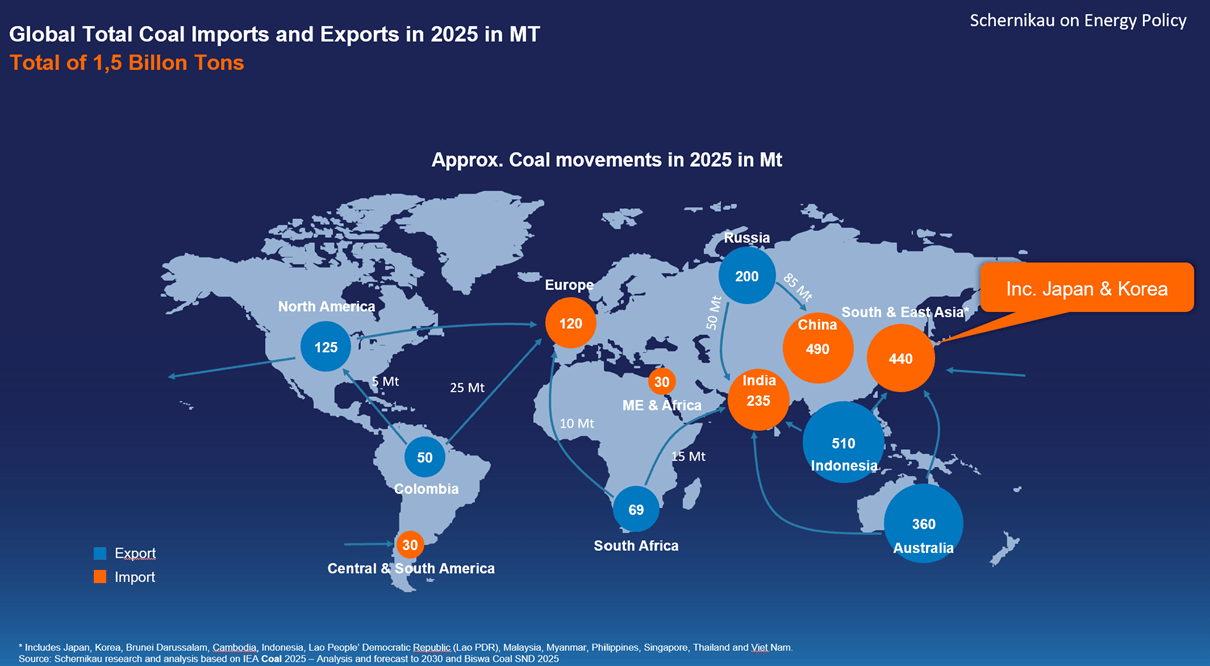
Figure 3: Global seaborne coal trade (thermal and metallurgical)
3. How much black rock do we have left?
We are not running out of coal anytime soon…you see the funny thing about natural resources is that the more we search for them, the more we tend to find. In grammar school, about forty years ago I was told that oil would last us about 35 years, yet somehow the world is still pumping over 100 million barrels per day. A helpful concept here is the resources-to-production ratio (R/P) basically asking: if we kept producing and consuming at today’s rate, how long would the known resources last?
By that measure, coal is in a league of its own (see Figure 4). According to the German Federal Institute for Geosciences and Natural Resources (BGR) 2024 [6], the world holds over 2,000 years of hard coal and more than 3,000 years of lignite potential when considering known total remaining resources. Even if you only count proven reserves (economical to mine today), coal still shows about 130–150 years of supply which is far more than any other fuel.
The availability of oil and gas seems much tighter. Proven reserves correspond to roughly 50–60 years for oil and about 50–55 years for natural gas. Uranium sits between 50-100 years of supply in known deposits for today’s reactors, though advanced technologies could stretch that much further. Note: the BGR statistics below probably underestimate the uranium reserves. In short, when it comes to sheer geological abundance relative to production, coal is the heavyweight champion of the energy world by far! (Figure 4).
Most importantly, coal is geologically democratic, widely available across the planet and largely immune to shipping bottlenecks, pipeline politics, or geopolitical hanky-panky (Figure 3). Basically, coal is the most abundant fossil fuel by volume, with proven recoverable coal reserves exceeding one trillion tonnes, representing the largest share of global fossil energy reserves.
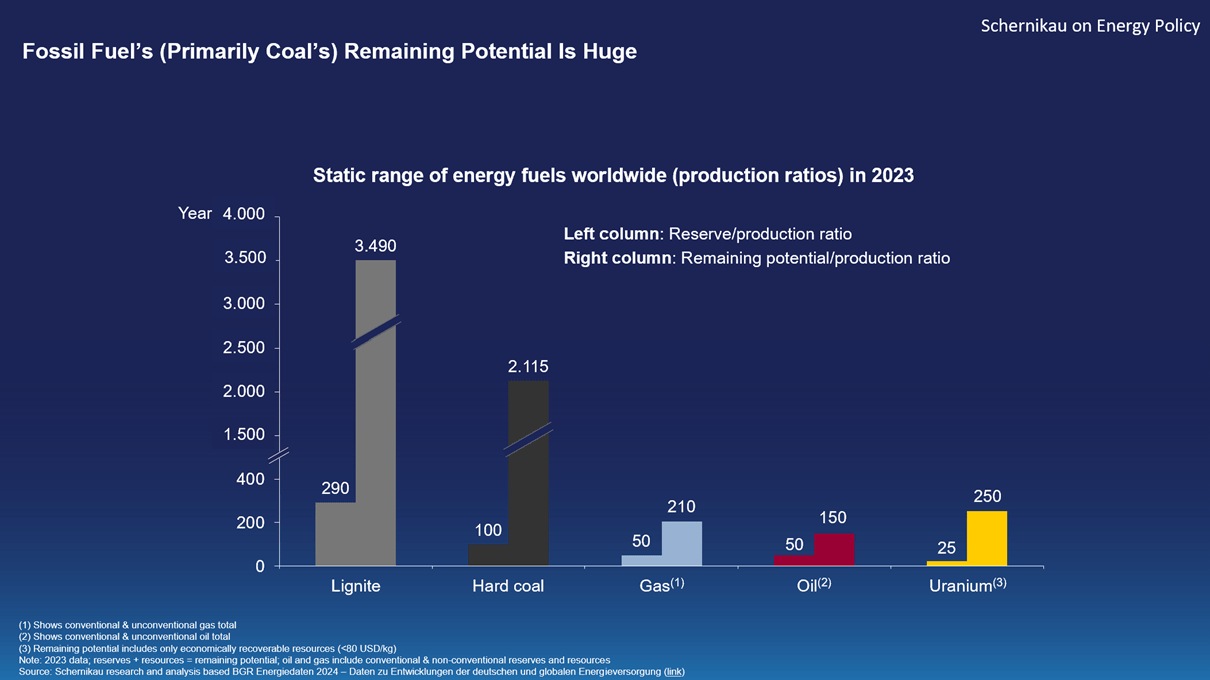
Figure 4: Coal lasts over 3.000 years [6]
4. Electricity, industry, and the economics of power
Electricity may seem modern, powering apps, clouds, and AI. To a surprising degree, electricity globally is still generated from this black rock from a geology museum called coal. Coal remains the largest single fuel for electricity generation, producing ~35% of the world’s power. The reason?… coal plants are reliable workhorses. You can store months of fuel in a pile next to the power station, burn it whenever needed, and keep turbines spinning day and night. In many countries with domestic coal resources such as China, India, Indonesia, Russian, and also the US, that reliability translates into very competitive electricity costs, especially compared to wind and solar at system level, or imported LNG. (see details here Energy trilemma) So as you see, coal may not be glamorous, but it is dependable, scalable, and rather inconveniently for critics, inexpensive.
Coal-fired electricity has continued to grow globally, because, let’s face it, the world keeps needing more power year after year. The expansion is concentrated in Asia, where industrialization, urbanization, and rising living standards are driving large increases in electricity demand. (also see Figure 8). China alone produces over half of the world’s coal power and added about 80 GW of new coal-fired power stations capacity in 2025 alone. That means China adds that is 3 Rostock-sized coal fired power stations every single week! Countries such as India and Vietnam are still adding capacity to keep up with demand for factories, air conditioners, and electric infrastructure. Europe doesn’t appear to need so much dispatchable, reliable, low cost power so the continent closed 13 GW of coal in 2025.
As a result, even while some western economies reduce coal use, global coal power generation breaks record after record. The modern digital world may run on electrons and algorithms, but a large share of those electrons still begin their journey in a boiler full of burning coal.
Another reason coal remains central to electricity systems is that thermal power plants provide the physical stability that electrical grids require to function properly. [7]
Large synchronous generators supply five fundamental characteristics that maintain grid stability, Thus, removing synchronous generators reduces fault level and system strength:
- voltage (system strength or electrical pressure, i.e. 220V),
- frequency (the instantaneous balance between supply and demand, i.e. 50 Hz),
- phase (synchronism between generators every milli-second),
- current (the actual flow of power through the network, i.e. 10 Ampere for a washing machine) and
- short circuit level (system strength, measured in GVA or Gigavolt-ampere, strong grids with thermal synchronous units have 20-40 GVA, weak grids with high wind and solar have <5 GVA).
These characteristics are inherent to rotating synchronous thermal generators, coal, gas, hydro or nuclear, while intermittently running, non-synchronous, inverter-based, wind and solar connected through power electronics do not inherently provide them in the same way (Figure 5). Thermal plants behave like the heavy flywheels of the grid, helping keep the system stable when demand or supply suddenly changes.
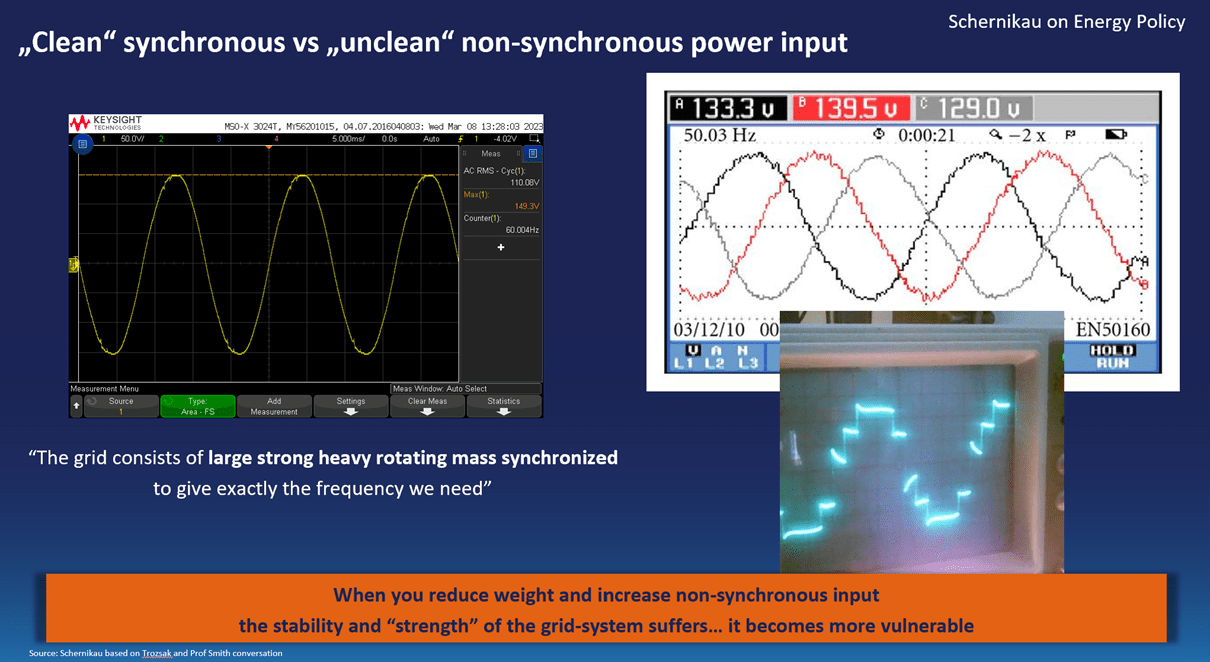
Figure 5: the difference between “clean” and “dirty” grid-power
Note: Clean = synchronous; dirty = inverter based non-synchronous wind and solar
Figure 6: The demolition of the Moorburg power plant in Hamburg [8]
Note for nerds: Electrons themselves drift very slowly through the grid only because they constantly collide with atoms in the metal. In a typical household wire carrying a few amps, their average drift speed is often less than a millimeter per second. Yet the electromagnetic signal—the voltage change—propagates through the wire at roughly 50–90% of the speed of light, depending on the cable. So when you switch on a lamp, the electrons near the bulb start moving almost immediately—not because electrons raced there from the switch, but because the electric field told them to start moving right where they already were.
Considering all this information, I can say that some policy decisions appear strikingly irrational…like in 2025, the Moorburg power plant in Hamburg, which was Germany’s newest and most efficient coal-fired power station, was demolished (see video above) [8] The 1.6-GW plant cost roughly €3 billion to build, was operated for only about six years, falling far short of the typical 40–50-year lifetime expected for such infrastructure. This illustrates how political decisions can diverge sharply from the long engineering and economic lifetimes of large power plants.
Two common misunderstandings also appear frequently in discussions about energy. First, coal and natural gas, as energy or raw material resources, are not always interchangeable. They differ in availability, transportability, storability, and industrial uses. Coal is on average also cheaper, and guess which price will increase more in the decades to come, gas or coal?
Second, natural gas is often assumed to be “better for the climate” and therefore hailed as an “obvious transition fuel”. This is an assumption that deserves closer examination and depends strongly on system boundaries and methane emissions (see “Natural Gas or Coal – Do we have a choice?” and our own peer-reviewed research Schernikau/Smith 2022 “Climate Impacts’ of Fossil Fuels in Today’s Energy Systems”). We need both coal and gas, but coal has certain advantages over gas that go beyond the dollar sign.
For the record, please give me all the nuclear you have and I still won’t be happy, why?… explained here – Advantages of Nuclear Energy
What remains clear is that the modern digital world may run on electrons and algorithms, but a very large share of the physical world is still built with materials that ultimately rely on coal: steel for buildings and machinery, cement for infrastructure, metals for electronics and grids, and high-temperature industrial heat that few alternatives can yet provide reliably and affordably.
5. Coal and the Environment: Separating Smoke from Science
If coal is removed from the material world, you don’t magically get a “greener” city but rather smaller, more expensive ones where people live shorter lives. [9] Steel, cement, concrete and metals are the physical backbone of modern civilization, and they all depend heavily on coal somewhere along the production chain. That doesn’t mean we should ignore environmental impacts. Quite the opposite. They do matter, and they can be reduced significantly with technology, a reality already proven in many parts of the world.
Think of Beijing twenty years ago. Grey skies were common, and face masks were part of everyday life. Today, according to official statistics, Beijing recorded blue skies on about 95% of days in 2025 [10]. After China launched its “war on pollution” in 2013, pollution levels dropped nearly 50% in just over a decade, even while China’s coal use kept climbing to new records. How? Mostly by replacing old coal plants with modern ones, installing advanced emission controls, and moving heavy industry away from urban areas. In other words, technology and regulation have improved the environment while still burning more and more coal.
Modern coal plants today look very different from their predecessors. Compared with older coal plants lacking modern flue-gas cleaning systems, emissions reductions typically reach roughly::
- Dust / particulate matter: ~99% lower
- SOx: ~95–99% lower
- NOx: ~80–90% lower
Interesting fact: A modern large coal plant can emit less particulate matter than heavy traffic at a single busy intersection, although the dispersion characteristics differ dramatically in favor of coal.
And yes, coal produces waste — roughly 1 Bt of coal ash per year globally.
The number sounds big until you compare it with other waste streams we produce as seen in the table below.
The point is… not all waste is equal. Coal ash is a large but relatively simple mineral waste stream, while “renewable” infrastructure waste is smaller but chemically more complex, often more toxic, and harder to recycle per ton.
Interestingly, coal also plays a role in technologies often seen as alternatives. Solar panels, for example, depend heavily on coal-powered energy and industrial processes and coal-derived materials during manufacturing. I summarized that connection in my article “Coal’s Importance for Solar Panel Manufacturing.”
As for improving environmental performance, the most effective approach is usually improving technology, not simply abandonment. High-efficiency modern power plants, such as advanced ultra-supercritical USC HELE (High Efficiency, Low Emissions, Figure 7) coal plants, significantly reduce fuel usage and emissions per unit of electricity. China’s experience shows how upgrading the technology base can dramatically improve air quality while maintaining energy supply and increasing coal use.
In short, if the goal is lower environmental impact, the practical answer is fairly straightforward… invest in more modern coal technology, optimize efficiency, and keep improving industrial systems. Or, if you want cleaner air, build cleaner plants. If the entire world would run on the newest coal plants, we would need 1/3 less coal with 95% cleaner air!
Coal needs Investment, not Divestment!
A note on CO2 and the climate: As always, for the discussion on greenhouse gases (GHGs) or climatic changes, causes and impacts, I refer to Prof. Steven Koonins bestseller “Unsettled” or the 2025 US Department of Energy’s “A Critical Review of Impacts of GHG Emissions on the U.S. Climate” [1]. I am of the opinion that our current knowledge and computational methods fall well short of providing reliable predictive capability for the climate system. Suffice it to say that CO2 induced greening of our planet is not in dispute anymore (see NASA and others [9]).
A note on Carbon Capture Utilization and Storage, CCUS: I illustrated in my recent research article on the same subject here that CCUS removes very little CO₂, requires large amounts of energy and capital, and delivers no measurable “climate impact” at scale .
| Waste type | Approx. annual volume | Main materials | Toxicity risk | Recyclability | Environmental impact if mismanaged |
|---|---|---|---|---|---|
|
Municipal solid waste |
~2 Bt |
Mixed household waste |
Moderate–high |
~20–25% recycled |
Methane emissions, plastics pollution |
|
Coal ash |
~1 Bt |
Mostly mineral (silica, alumina, calcium) |
Moderate-low |
~50–60% reused (cement, concrete) |
Groundwater contamination if poorly stored |
|
Wind / solar / battery waste (2050 est.) |
~0.1 Bt |
Glass, composites, metals, chemicals |
Moderate–high depending on component |
Currently low for blades/PV |
Composite landfill buildup, battery chemical risks |
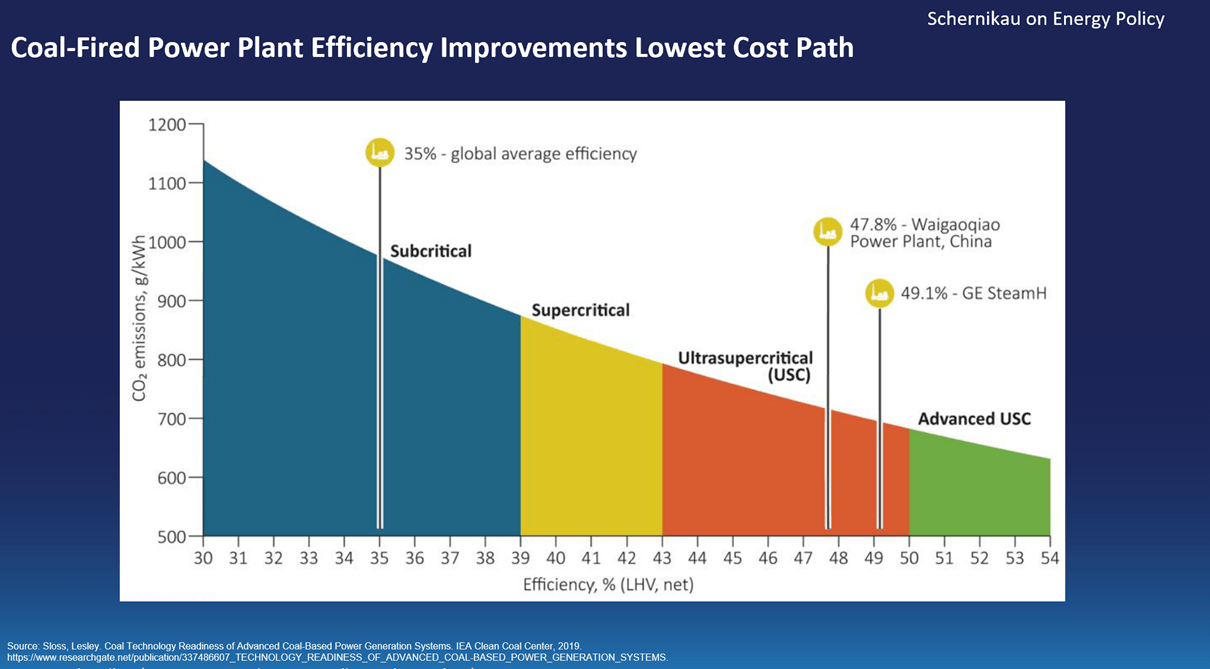
Figure 7: Coal technologies
6. Coal’s Next Act: Retirement… or Revival?
Unlike oil and gas, which often travel through a maze of pipelines, chokepoints, and the occasional geopolitical drama, coal deposits are broadly spread across the planet. Many countries sit on their own reserves, meaning they don’t have to rely on fragile shipping routes or hope that global politics behaves nicely this week.
In other words, coal is the boring but reliable friend of the energy world. It is widely availble, doesn’t need complicated pipelines, and it’s remarkably hard for anyone to “turn off the tap” from afar. It’s also hard to set on fire and it runs no risk of exploding. For nations worried about energy security, that kind of geological democracy has its advantages.
The fact that coal is amongst the lowest cost and safest sources of electricity has sunk in not only to the ASEAN Energy Ministers who confirmed in 2024 in writing in a one-in-a-kind white paper [11]:
“In fact, coal currently outperforms other energy sources in terms of supply security, reliability, affordability and—to some extent—sustainability in ASEAN’s power generation.”
When the ASEAN says in the same document that “A strategic shift from coal should be implemented at the right time as soon as economic and environmentally friendly alternatives at the grid scale become available.”, they are saying that no viable grid-scale alternatives to coal exists in the ASEAN… and elsewhere?
Let’s take a quick tour around the world.
China: In 2025 alone China commissioned about 80 GW of new coal capacity—roughly 70% of Europe’s entire coal power fleet. Capacity will likely continue growing to guarantee grid stability. Ironically, plant utilization may fall because increase wind and solar farms operate whenever the wind blows and the sun shines. The result? More backup capacity and higher system costs. By the way, China’s EV strategy is a smart shift from imported oil to domestic coal.
India: India has been very clear. Coal consumption could rise from about 1.2 Bt today to roughly 2.6 Bt by 2047, with around 100 GW of new coal plants planned within the next decade [12]. India’s economic growth will, quite frankly, run on coal.
Southeast Asia: Countries such as Indonesia, Vietnam, the Philippines, Bangladesh, and Malaysia continue to rely heavily on coal. LNG imports are often more expensive and geopolitically more fragile, while “net-zero” ambitions remain mostly on paper rather than in power grids. (Figure 8)
United States: In April 2025, President Trump signed executive orders to “reinvigorate America’s coal industry.” With the goal of increasing production, accelerating leasing on federal lands, and keeping coal available for grid reliability in 2026. The reason is that electricity demand is rising sharply, not least because of AI and data centers. The February 2026 landmark Vanguard vs. Blackrock [13] settlement put a serious damper on “ESG driven” anti-coal financing activity.
Europe: Europe, meanwhile, has largely lost touch with energy security and industrial reality. In many policy circles “coal” has become a dirty word. Poland remains the major exception, still relying heavily on coal while simultaneously being pushed by EU policy toward wind and solar. Meanwhile, Europe replaced domestic coal and nuclear with dependence first on Russian gas and later on imported LNG from the United States, which is not an improvement, neither economically, geopolitically, nor environmentally.Also in Europe, when it’s cold and dark, only coal, gas, and nuclear can keep the lights on. Somehow, Europe appears to turn back to coal everytime geopolitical turmoil arises. [1]

Figure 8: Electricity Generation in Selected Southeast Asian Countries
So where do we go from here?
Continuous geopolitical tensions, from Europe to the Middle East to Latin America, remind us of the simple truth that energy systems need diversification. And in that sense, coal remains something of a cheap, abundant, and secure secret weapon.
The AI revolution and future innovations will rely on vast amounts of uninterrupted, 100% reliable, and low cost electricity, far more than gas, nuclear, and hydro alone can provide for many decades to come. We should start embracing coal and focus on making it cleaner through investments, not dirtier through divestments, as Germany has shown.
The US announced its first new coal plant in 13 years to power AI in Alaska. [16]
Kazakhstan is also a good example of how we should be approaching coal today, not by abandoning (Divestment) it, but by modernizing it (Investment). The Kazakh government announced in 2026 that it aims to expand and upgrade coal-based power generation as to address long-term electricity shortages and upgrading aging infrastructure.
This national project will add and upgrade roughly 7.6 gigawatts of coal-fired capacity in the coming years,.
What the US, Kazakhstan, and other nations are doing opens the floor for the debate to pivot from – eliminating coal overnight to, how to modernize existing plants, improve efficiency, and maintain reliable power systems while demand for electricity continues to grow. [13/14]
—
Personally, I fully support a “New Energy Revolution”—a gradual transition toward energy systems that rely less on fossil fuels. But that “transition” cannot realistically be one based on today’s wind and solar technology, which struggle with energy density, reliability, and lifetime constraints (blog Primary Energy Fallacy). If a true large-scale alternative exists, it is far more likely to use the nuclear force.
If you want to learn more about electricity and the future of energy, our book, The Unpopular Truth about Electricity and the Future of Energy is a great place to start.
If you want to learn more about coal, please dont hesitate to get the electronic or physical copy of “Schernikau’s Coal Handbook”
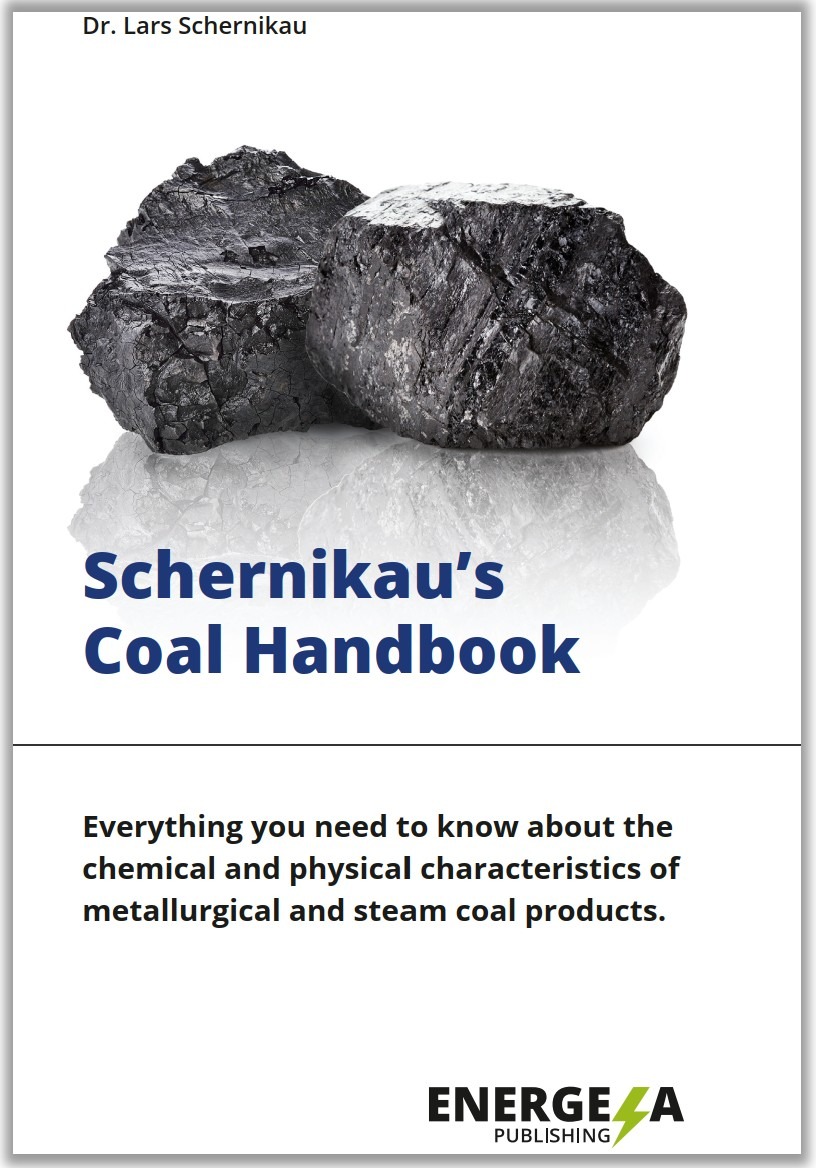
Schernikau’s Coal Handbook, available in print or as eBook on Amazon or your favorite book store
Links and Resources
[1] IEA: Electricity 2026 – Analysis. 2026. (link)
[2] IEA: Coal 2025 – Analysis. 2025. (link)
[3] “Europe Boosts Coal-Fired Power as Gas Prices Rally on Iran War.” March 2026 (link)
[4] Biggs, Natalie. WoodMac: Global Thermal Coal Short Term Outlook. Wood Mackenzie, 2026
[5] ACE Assessment Role of Coal in ASEAN Energy Transition, Coal-Phase-Out. 2024. (link)
[6] BGR Energiestudie 2023 – Daten und Entwicklungen der deutschen und globalen Energieversorgung. 2024. Application/pdf. (link)
[7] “Storm: The Importance of Coal: Thermal Performance Considerations for Heat Rate and Resiliency.” Dick Storm’s Thoughts on Energy, Education, Economic Prosperity & Environmental Blog, February 2026. (link)
“Storm: The Importance of Coal, Part 2: Coal Power in the Rest of the World.” Dick Storm’s Thoughts on Energy, Education, Economic Prosperity & Environmental Blog, February 2026. (link)
[8] Moorburg: Germany detonates its most modern coal-fired power plant after just six years. The Moorburg plant in Hamburg cost €3 billion and produced 1,654 MW, enough to power the entire city. (link)
Moorburg: The Catastrophic Failure of Europe’s Newest Power Plant. What Happened? (link)
[9] NASA: CO2 Is Making Earth Greener—for Now.” Climate Change: Vital Signs of the Planet, 2016. (link)
[10] “Beijing Records Blue Skies on 95.3% of Days in 2025.” Accessed February 16, 2026. (link)
[11] ACE Assessment Role of Coal in ASEAN Energy Transition, Coal-Phase-Out. 2024. (link)
[12] Reuters. “India Will Use More Coal over the next 25 Years, Report Says.” Energy. February 10, 2026. (link)
[13] “Attorney General Paxton Secures Historic, Industry-Changing Agreement with Vanguard to Protect the Coal Industry and Empower Investors | Office of the Attorney General.” Accessed March 3, 2026. (link)
[14] National Project for the Development of Coal-Based Power Generation (link)
[15] Kazakhstan Advances Plans to Modernize Coal-Fired Power Sector (link)
[16] US Planning First New Coal Power Plant Since 2013 in Alaska (link)